
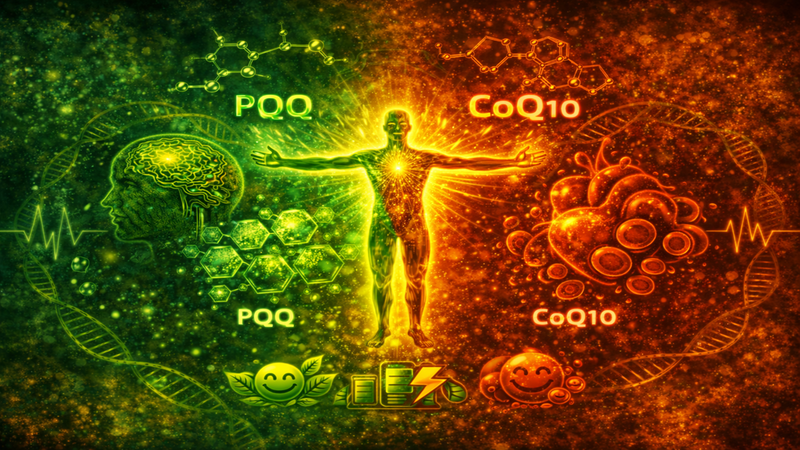
CoQ10 and PQQ: Unlocking the Power of Combined Benefits
Key Takeaways
- CoQ10 and PQQ complement each other by enhancing mitochondrial function, increasing energy metabolism, and promoting cellular longevity.
- Packed with powerful antioxidant protection, these supplements combat oxidative stress and promote optimal cellular health.
- Studies demonstrate advantages for cognition, possibly improving memory, safeguarding neurons, and bolstering focus.
- CoQ10 and PQQ support heart health by awakening cells' energy production and promoting healthy blood pressure and circulation.
- To effectively supplement, select bioavailable forms and use daily with dosage guided by your specific needs and health objectives.
- As with any new supplement, coq10 and pqq benefits always talk to a healthcare professional before starting, particularly if you take medication or have chronic health conditions.
CoQ10 and PQQ are two of the most studied nutrients for cellular energy, recovery, and long-term performance.
CoQ10 helps support mitochondrial efficiency, which affects how the body generates and utilizes energy during repeated training.
PQQ is associated with mitochondrial biogenesis, which means it might assist in building new energy infrastructure over time.
Research links these two to increased endurance, more consistent energy, and enhanced recovery measures, which are important factors for hard-headed athletes obsessed with sustainability.
The Cellular Power Duo
CoQ10 and PQQ are often discussed together because they target one of the most critical bottlenecks for long-term performance: mitochondrial health. For those of us who train hard and think in decades, not weeks, these two provide real world infrastructure, not a band-aid.
CoQ10 is already popular with many serious athletes and professionals. It is a fat-soluble antioxidant found naturally in your cells, primarily in the mitochondria, which is the part of the cell that converts food into usable energy. Without sufficient CoQ10, that process decelerates.
It could manifest as slow healing, poor endurance, or exhaustion that exceeds your workout. The research is conservative but consistent: daily CoQ10, in doses from 100 to 300 mg, can support stable energy levels, protect cells from oxidative stress, and even reduce the frequency of migraines.
There is some data behind it for heart health and between-session recovery. Effects are not immediate. It accumulates over weeks of disciplined use. Because CoQ10 is fat-soluble, taking it with a meal, particularly one loaded with good fats, not only enhances absorption but makes every milligram go further.
PQQ isn’t as much of a household name but absolutely belongs in the discussion. It’s another mitochondrial cofactor, but its primary function is not merely supporting existing mitochondria. PQQ helps the body generate new mitochondria and has demonstrated potential in supporting cognitive function and brain health into old age.
There’s data it can decrease markers of oxidative stress, which is important if you’re going deep on volume or dealing with chronic work pressure. PQQ complements CoQ10 by increasing the number of “power plants” in your cells, while CoQ10 helps keep each plant running efficiently.
CoQ10 and PQQ as your cellular power duo. They complement one another. CoQ10 squeezes the most out of each mitochondrion and PQQ promotes creating more, providing a one-two punch for energy and resilience.
It’s this synergy that’s why you’ll sometimes see the two incorporated together in cutting-edge daily wellness regimens, particularly among performance-minded physical and mental athletes.
Results in steadiness, not spikes. No buzz, no crash, don't expect. Instead, athletes and high-performers note more stable energy throughout extended training weeks, reduced mid-afternoon slumps, and better recovery between sessions.
Unpacking The CoQ10 and PQQ Benefits
CoQ10 and PQQ work quietly, behind the scenes, supporting the foundational systems that power sustained performance, recovery, and resilience. They don’t provide a rapid, perceivable ‘kick’. They’re more infrastructure builders, making energy steadier, shielding cells, and helping you stay in the game longer.
Let’s unpack their underlying benefits and how they fit into a systematized performance regimen.
1. Mitochondrial Synergy
Both CoQ10 and PQQ target mitochondria—the energy centers of all cells. PQQ promotes the formation of new mitochondria, which is mitochondrial biogenesis, while CoQ10 energizes those mitochondria and facilitates effective energy generation. Together they act as a stim-free ‘power combo’ that enhances how your body produces and handles energy, especially during the moments you need it most.
Healthy mitochondria aren’t only about more energy on training days. They’re about less tired between sessions, more recovered, and more predictable week by week. When mitochondrial function starts to decline, it manifests as sluggishness, slower recovery, and uneven production.
This stack can help slow those declines and restore a more youthful structure to your cellular engines.
2. Antioxidant Defense
CoQ10 and PQQ are both powerful antioxidants. They combat the damaging free radicals that pile up during training and daily stress. This isn’t just about mitigating soreness; it’s about shielding the cellular engines that power your movement and cognition in top form.
Antioxidant support matters most where metabolic demands run highest: heart, muscles, and brain. CoQ10, in specific, stabilizes cell membranes and reduces inflammation. Regular use leads to less cumulative damage, which is what enables you to maintain longer training cycles and age more healthily.
3. Cognitive Function
The brain is ravenous for energy and prone to oxidative damage. CoQ10 and PQQ provide both sides by energizing neurons and protecting them from harm. Others indicate enhanced memory, concentration, and even resistance to age-related cognitive decline after 8 to 12 weeks of supplementation.
Neuroprotection is not just for later life. For anyone juggling work, training, and family, the acuter cognition and reduced brain drain make a difference. Mitochondrial health and cognitive performance are tightly connected.
Support one and you support the other.
4. Heart Health
Heart cells go through energy at a tremendous rate. CoQ10 helps fuel this system and PQQ adds another layer of protection. Consistent supplementation in the 100 to 300 mg daily range for CoQ10 has demonstrated measurable benefits for blood pressure, recovery after exertion, and healthy circulation of blood.
Heart health isn’t only about staying disease free. It’s about endurance, stress tolerance and the capacity to train hard for years without sacrifice. It may take a few weeks to see noticeable benefits, but the commitment is worth it for your long-term wellness.
5. Metabolic Support
Efficient metabolism underlies. CoQ10 and PQQ both promote fat burning and metabolism. For dedicated athletes, this leads to more consistent energy, reduced mid-day crash, and improved weight management without resorting to stimulants.
There’s promising research they can aid patients at risk for metabolic disease, stabilizing blood sugar and reducing inflammation markers. For the majority, the impact is nuanced but consistent.
Energy seems less susceptible, and the machinery hums a bit better with use.
Beyond The Basics
CoQ10 and PQQ are stellar for cellular energy production. Their magic ripples out into broader systems, including immune regulation, inflammation control, and overall resilience. For dedicated athletes and pros thinking in years, not days, these potent antioxidants provide infrastructure-level support that boosts quality of life without the quick-fix theatrics.
Bioavailability
Not all dietary supplements for CoQ10 or PQQ work the same. Bioavailability is crucial as it ensures these molecules effectively reach the cells that require them. Ubiquinol, the reduced form of CoQ10, is significantly more bioavailable than standard CoQ10, particularly for individuals over the age of 35. In studies, the salt form PQQ disodium shows robust oral absorption, enhancing its effectiveness as a potent antioxidant.
Absorption is paramount since both compounds are fat-soluble and require carriers or specific formulations to cross cell membranes. This is why the best nutrient supplements often incorporate delivery systems like lipids or emulsifiers. Low-grade products fail the absorption test, resulting in wasted expenditure rather than meaningful biological effects.
Choosing supplements that clearly disclose their form, source, and third-party testing status is not just a detail; it forms the foundation for achieving consistent, predictable outcomes in cellular energy production.
Cellular Aging
As we age, mitochondria deteriorate, making older individuals more susceptible to fatigue, slower healing, and chronic illness. Coenzyme Q10 and PQQ both support mitochondrial health through distinct benefits, working through complementary mechanisms. CoQ10, particularly in its ubiquinol form, functions as a cofactor in electron transport, directly enhancing bioenergetic capacity and mitigating oxidative stress.
PQQ promotes mitochondrial biogenesis by signaling your cells to construct new energy factories. Clinical research indicates that just 20 mg of PQQ daily can maximize mitochondrial biogenesis in humans. Furthermore, mitochondrial dysfunction has been linked to serious health conditions such as Alzheimer’s, type 2 diabetes, and heart failure.
By activating antioxidant enzymes (SOD, CAT, and GPX), PQQ and CoQ10 help slow cellular degradation, thus supporting healthy aging. Maintaining mitochondrial performance is not merely about extending lifespan but ensuring that every training cycle, work sprint, and recovery window is reliably effective.
Exercise Performance
Endurance and recovery aren’t just about willpower; they stem from the body's cellular energy production. Coenzyme Q10 and PQQ each assist the mitochondria’s capacity to generate consistent, long-term energy when under heightened stress. This leads to less mid-session fatigue, quicker recovery, and an overall energy boost week after week.
PQQ has been shown to enhance cognitive health, reduce inflammation, and decrease markers of oxidative stress in certain studies. Ubiquinol CoQ10 supplementation increases VO2 max and delays muscle fatigue in trained individuals, highlighting its distinct benefits for athletic performance, which relies heavily on mitochondrial health.
Strong mitochondria are more able to adapt, accumulate less fatigue, and are less prone to injury. Gut health is important. The gut microbiome’s balance is connected with inflammation and overall systemic resilience, with certain evidence that PQQ could potentially indirectly support microbiome function.
How They Work Together
CoQ10 and PQQ work together. Each complements the other, establishing a balance that encourages durability, not bursts. This isn’t about pursuing a short-term boost. It’s about fueling the cellular engine that powers actual long-term performance.
Mechanism | CoQ10 Role | PQQ Role | Combined Effect |
Mitochondrial function | Supports ATP production, stabilizes electron transport chain | Stimulates new mitochondrial growth (biogenesis) | Higher cellular energy, better output |
Antioxidant defense | Reduces oxidative damage in mitochondria | Scavenges free radicals, regenerates other antioxidants | Reduced oxidative stress, slower cell aging |
Bioavailability, synergy | Absorbed variably, often limited | May enhance CoQ10 absorption and efficacy | More reliable, consistent results |
Stress response | Depleted under chronic stress | Helps preserve CoQ10 under stress | Better resilience, steadier recovery |
Lipid metabolism, inflammation | Supports fat metabolism, mild anti-inflammatory effect | Boosts β-oxidation, reduces obesity-related inflammation | Leaner metabolism, less inflammatory drag |
The synergy of both compounds is what counts for anyone focused on cellular health. Stress, age, and a high training load contribute to CoQ10 depletion. PQQ steps in to help by preserving CoQ10 levels and by spurring new mitochondrial growth.
So your cells aren’t just working harder, they’re working smarter, with more backup and less wear. Consider it as toughening up an engine and installing new cylinders simultaneously.
The synergy is pragmatic, not academic. Research discovers that the mix supports increased energy generation, more consistent recuperation, and less erratic output, particularly when stressed or burdened.
For lifters, this means more reliable session-to-session recovery, reduced random fatigue, and clearer cognition throughout the week. Combos like this aren’t about being “wired.” They manifest as less compounding exhaustion, more consistent production, and sharper cognition as the days pile on.
Data indicates better lipid metabolism and reduced inflammation. In the real world, this translates to simplified weight maintenance, diminished joint pain, and reduced relapses due to inflammatory drag.
If you’re training for performance measured in decades, not weeks, these are the silent factors that add up. They don’t often make headlines, but they’re what keep you moving strong when everyone else starts to sputter.
Clarity and stress resilience count as much as muscle. PQQ and CoQ10 combined demonstrated potential to support cognitive performance, especially when facing stress or sleep debt.
This is not a shortcut; it’s infrastructure. You develop the ability to take on more, bounce back quicker, and stave off decision fatigue.
Practical Application Guide
CoQ10 and PQQ aren’t fast solutions; rather, they support cellular energy production and overall health. Their worth lies in calculated, consistent application. Incorporating these powerful supplements into your daily wellness routine requires working out dosage, safety, and response.

Effective Dosage
Supplement | General Dose (per day) | Notes |
CoQ10 | 100–200 mg | Split dose with meals for absorption |
PQQ | 10–20 mg | Often paired with CoQ10 |
The appropriate dosage is contingent upon your body weight, training volume, and specific objective. For PQQ, studies show that 10 milligrams per kilogram per day in animals enhances metabolic health, while typical human doses are 10 to 20 milligrams daily.
For CoQ10, 100 to 200 milligrams per day is typical, but some athletes use higher doses during intense training. Metabolic demands, age and medication use all matter. High stress, chronic fatigue, or statin use may warrant higher CoQ10.
PQQ tissue levels plateau with as little as 1 to 3 mg per day, but a greater dose may be required in individuals interested in mitochondrial or neuroprotection. Stick to research-backed ranges. More isn’t always better.
Going beyond recommendations can diminish effectiveness or cause harm. Titrate down slowly, monitor your recovery and energy, and re-visit if your training or health status shifts.
Safety Profile
CoQ10 and PQQ are both typically well-tolerated, with minimal risk of significant side effects. Mild reactions such as stomach upset, headache, or insomnia may occur but abate on dose modification.
As with any supplement, if you’re taking medications—particularly blood thinners, blood pressure drugs, or chemotherapy—consult with a doctor before you begin supplementing. These ingredients can interfere with certain medications. However, side effects are uncommon.
PQQ is very safe in studies and animals. At doses up to 100 to 200 mg per kilogram, there is little toxicity. Personal factors, such as pre-existing medical conditions, allergies, or sensitivities, should always be honored.
Consciousness is more important than worry. Track your reaction, understand your baseline, and focus on consistency, not the pursuit of marginal gains.
Noticeable Effects
Most users don’t experience an instant jolt. Instead, they experience reduced daily drag, reduced midday crashes, and smoother training cycles. All the reviews focus on enhanced stamina and clarity, not hype or stimulation.
Impacts accumulate over time. Follow sleep quality, energy consistency, and workout recovery in a training log or app. Data over weeks, not days, will show if these instruments are actually shifting the needle for you.
The Future of Cellular Health
Cellular health is moving from a niche topic to a central concern for anyone interested in long-term performance. The dialogue is shifting from short-term boosts to maintaining output, recovery, and resilience over decades. Coenzyme Q10 and PQQ now take center stage in this transition, not as miracle solutions, but as infrastructure for the machinery below the hustle.
New research identifies PQQ as a mitochondrial powerhouse. Mitochondria, the power plants of your cells, determine everything from energy to recovery. A few research studies demonstrate PQQ has the capability to activate mitochondrial biogenesis, which stimulates your body to construct new, healthy mitochondria. This process is crucial for enhancing cellular energy production.
That means more consistent energy production, less accumulated exhaustion, and stronger regeneration. There’s evidence PQQ can reduce oxidative stress, one of the root causes of cellular aging and metabolic dysfunction. Put simply, it results in less cellular damage, something that counts for anyone training hard and reaching for their personal best.
CoQ10, meanwhile, fuels the electron transport chain, which is the mitochondria’s energy manufacturing engine room. There’s even some evidence that ubiquinol CoQ10 promotes reproductive health and reduces the risk of aneuploidy, although additional data is necessary before drawing firm conclusions.
What’s clear is that CoQ10 and PQQ together address both the creation and protection of cellular powerhouses. They don’t power a spike like caffeine or provide a temporary boost like pre-workouts; they construct the infrastructure that sustains the machine when stress is elevated, contributing to overall health.
Supplementation strategies are evolving. The typical dietary consumption of PQQ—approximately 3–6 mg per day—is likely insufficient. New supplement blends are exploring higher, more targeted doses, occasionally paired with CoQ10 or other antioxidants to maximize synergy and enhance their antioxidant properties.
Dosage is not a free-for-all. There are signals that extremely high PQQ doses could be problematic, like kidney stress in animal subjects. That’s why moderation, titration, and continued research are crucial. The right balance isn’t about more — it’s about fit, consistency, and long-term safety.
The big picture: Mitochondrial health is now recognized as a pillar of metabolic health, disease prevention, and healthy aging worldwide. Mitochondrial dysfunction is a factor in neurodegenerative disorders, cardiovascular disease, and even certain cancers.
If the mitochondria go down, the system goes down—no matter how driven or disciplined the human. That’s why the future of wellness is centered on fueling these cellular engines, not just revving the nervous system for a quick hit.
Conclusion
CoQ10 and PQQ deliver actual, proven benefits to a performance system designed for long-term use. Both promote energy generation at the cellular level. CoQ10 is an integral component of mitochondrial function, while PQQ aids in the preservation and creation of mitochondria.
The combination suits athletes and executives who prioritize recovery and consistency over buzz. Long-term studies indicate advantages in endurance, mental clarity, and recovery. Don’t anticipate a magic bullet overnight. Instead, the effect accrues with consistent use and integrates into a larger rejuvenation and maintenance regimen. These tools operate behind the scenes, enabling the machine so you continue to bring it—session after session, year after year. That’s what makes them worth a look.
Frequently Asked Questions
What are the main benefits of CoQ10 and PQQ for cellular health?
CoQ10 and PQQ, known for their potent antioxidant properties, optimize cellular energy production and shield cells from harm, supporting heart health, brain function, and overall health.
How do CoQ10 and PQQ work together in the body?
CoQ10, a potent antioxidant, supports mitochondrial function, while PQQ enhances cellular energy production and resilience through its powerful antioxidant properties.
Are CoQ10 and PQQ safe for daily use?
For the majority of healthy adults, ubiquinol CoQ10 and PQQ are safe for use as indicated. As always, check with your doctor before beginning any new dietary supplement.
Can CoQ10 and PQQ improve brain health?
Research indicates that both coenzyme Q10 and pyrroloquinoline quinone (PQQ) aid cognitive health by safeguarding brain cells and enhancing cellular energy production within the brain.
What is the recommended dosage for CoQ10 and PQQ supplements?
Common doses for CoQ10, a potent antioxidant, range from 100 to 200 mg per day, while PQQ, known for its mitochondrial support, typically falls between 10 to 20 mg per day.
Who should consider taking CoQ10 and PQQ?
Adults looking to support heart, brain, or cellular health may benefit from dietary supplements like ubiquinol, a potent antioxidant that enhances cellular energy production. If you have any underlying health conditions or are on medication, it’s better to see a doctor first.
Do CoQ10 and PQQ have any known side effects?
Side effects are uncommon but might entail digestive discomfort or headaches. If any abnormal symptoms occur, discontinue use and consult a healthcare professional about your dietary supplement regimen.
Additional Topics: