
Key Takeaways
CoQ10, a key player in cellular energy generation, serves as a potent antioxidant, nurturing cell vitality and fortitude.Supporting optimal CoQ10 maintains energy, reduces fatigue, and guards against oxidative stress, which are all important for active people and long-term health.Both ubiquinone and ubiquinol forms of CoQ10 are beneficial, but their absorption and efficacy can differ.
Selecting the correct form and taking CoQ10 with fat-containing meals can enhance outcomes.Supplementation can help heart health, brain function, exercise, and fertility, especially in individuals with increased demands or age-related decline.
While natural dietary sources and internal production play a role in CoQ10 status, aging, health conditions, and some medications in particular statins decrease levels.See our healthcare professional to find the appropriate dosage, any possible medication interactions, and safe effective use of coq10 supplements.
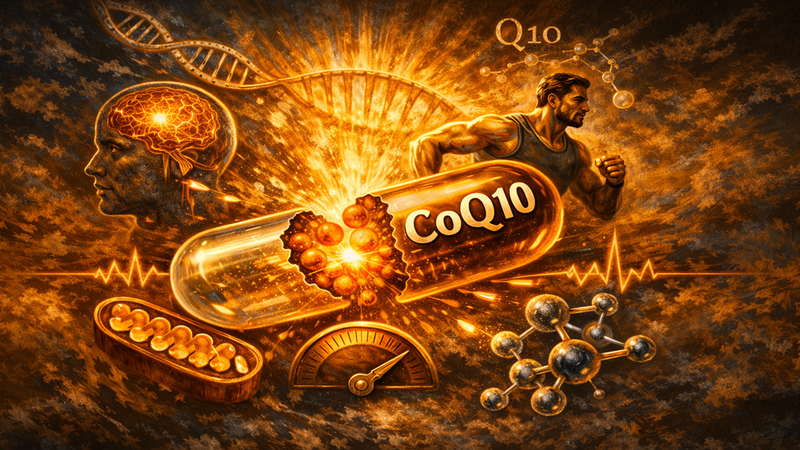
CoQ10 is a naturally occurring compound that helps with cellular energy and recovery. Present in almost all cells, it assists mitochondrial function and helps in the conversion of nutrients into energy.
Endurance athletes and those interested in long-term performance turn to CoQ10 for its consistent, behind-the-scenes assistance. Studies connect regular CoQ10 consumption to heightened endurance, diminished recovery times, and enhanced heart health.
Knowing what it does lays the groundwork for more informed supplementation choices.

The Dual Role of CoQ10
Coenzyme Q10, a.k.a. CoQ10, is a fat-soluble compound present in just about every cell. It plays two central roles: supporting cellular energy production and defending against oxidative damage. These roles constitute the foundation of durable performance and recovery, not ephemeral sparks. CoQ10’s impact reaches gene expression and cell signaling, modulating how our bodies respond to training, stress, and aging.
Thinking about its dual role is thinking about CoQ10 as infrastructure—unassuming, reliable, and essential.
1. Cellular Energy
CoQ10 is needed to produce ATP inside mitochondria, the “power plants” of the cell. ATP is the true energy currency, fueling muscle contractions, brain activity, and every cellular task. If CoQ10 declines, so does ATP. That results in fatigue, poorer recovery, and a cap on physical performance.
In athletes and hard trainers, even a minor CoQ10 deficit can cause workouts to feel heavier and progress sluggish. By keeping CoQ10 optimal, your energy system will hum along, supporting not only your exercise but overall health and vitality as well. This isn’t about bursts; it’s about consistent performance, day in, day out.
2. Antioxidant Defense
CoQ10 is a potent antioxidant, intercepting free radicals before they harm cells. Oxidative stress is with us from hard training, pollution, and bad sleep—life. Over time, this unbridled oxidative damage leads to chronic diseases, such as heart disease, diabetes, and neurodegeneration.
It functions as an antioxidant itself, and supplementing with CoQ10 can help fortify the body’s own intrinsic antioxidant capacity, particularly in populations under significant physical or metabolic stress. There’s some evidence that CoQ10 can support heart health, which is good news for coronary artery or heart failure patients, but the information is mixed.
It has neuroprotective properties, potentially lowering the risk for Parkinson’s and Alzheimer’s. On the flip side, monitor for interactions—CoQ10 can raise bleeding risk when taken with blood thinners such as warfarin.
3. Gene Expression
CoQ10 doesn’t only energize cells; it regulates genes that influence metabolism, inflammation, and oxidative stress. Other research reveals CoQ10 regulates the expression of genes involved in immunity and anti-inflammatory pathways. This modulation potentially explains reductions in inflammatory markers found in athletes and clinical populations.
There’s new research on its benefits in cancer-related fatigue and other conditions, but much of it is preliminary and not conclusive. The takeaway is that CoQ10’s impact on gene expression could hold therapeutic promise, but more human data is needed.
4. Cell Signaling
Beyond energy and defense, CoQ10 is part of cell signaling—the communication system cells use to regulate things like inflammation and immune response. It influences signaling molecules that maintain both inflammation at bay and immune equilibrium.
In the nervous system, CoQ10’s signaling might serve to protect against neurodegenerative diseases. Good signaling is important for cellular homeostasis—the equilibrium cells require to persist over time. When these pathways are disrupted, it can sabotage performance and health over the long term.
CoQ10’s role in supporting these systems is subtle but significant, particularly for those operating on a scale of decades, not days.
Forms of CoQ10
CoQ10 comes in two primary forms: ubiquinone (oxidized) and ubiquinol (reduced). Both are integral to cellular energy and antioxidant protection, yet their form, absorption, and use vary. The best form for you varies based on your health status, goals, and age. Knowing these variations allows you to put your power in tools that suit your system, not just buzz.
Ubiquinone
Ubiquinone is the oxidized form of CoQ10. It fuels mitochondrial energy production by transporting electrons in the cellular “power plant.” Most research on cardiovascular benefits, such as a 2023 meta-analysis, centers around ubiquinone. It’s stable, affordable, and the most common supplement form, found in capsules or softgels, usually 30 to 300 mg.
Ubiquinone’s main advantage is reliability. It survives storage and processing, and the body efficiently converts it to ubiquinol as needed. This transformation is effortless for most healthy adults. It’s the gold standard in supplements, and it’s helped aid endothelial function at dosages of 150 to 300 mg per day for a few weeks.
In the real world, ubiquinone covers most performance and recovery bases for athletes without a known deficiency. It is not flashy, but it works as part of a disciplined system.
Ubiquinol
Ubiquinol is the reduced, active antioxidant form of CoQ10. It scavenges free radicals and guards cells from oxidative stress. As we get older or experience health stressors, this conversion of ubiquinone to ubiquinol can decrease. For seniors or the chronically ill, ubiquinol might provide a competitive advantage.
Ubiquinol is more bioavailable, meaning our bodies absorb it better. This is important for individuals with absorption problems or those consuming large quantities. It has gained traction in the supplement industry for these reasons, though proof of its cardiovascular efficacy is more limited than ubiquinone’s.
You’ll find ubiquinol in higher end softgels, but its advantages are most significant among certain populations or those with compromised conversion. For the average healthy, disciplined athlete, ubiquinone is enough.
Bioavailability
Bioavailability means what percentage of a supplement your body actually absorbs and uses. With CoQ10, absorption is infamously inconsistent. Formulation matters: softgels and oil-based capsules are superior to dry tablets.
The dose, presence of dietary fat, and individual factors such as age and health status influence absorption. Taking CoQ10 with a fat-containing meal doubles absorption compared to taking it fasting. Delivery vehicles like lipid nanoparticles or emulsions can enhance absorption, but at a cost.
In reality, dosing consistently with food is the highest-impact variable most can control.
Potential CoQ10 Benefits
CoQ10 is essential to cellular energy generation and antioxidant protection, with significant effects on aging and vitality. Atop immediate benefits, it impacts heart, brain, metabolic, and reproductive systems — all places where hard-charging athletes and professionals seek steadiness.
Heart Health
CoQ10 promotes cardiovascular endurance by easing symptoms in those with heart disease and optimizing heart function. Other controlled trials demonstrate it significantly lowers systolic and diastolic blood pressure, sometimes by as much as 17 over 10 millimeters of mercury, with minimal side effects reported even at high doses. This is great news if you have hypertension and want to lower heart risk without piling more pharmaceuticals on top.
It’s been demonstrated to reduce oxidative stress and inflammation in heart tissues, two culprits that accelerate chronic heart dysfunction and delay recovery after intense training. It’s been especially helpful for statin users. Muscle pain and cramping are common side effects for those on statin medication, and in one clinical trial, 75% of recipients felt relief after one month of supplementation.
The mix of improved circulation, less inflammation, and lower side effect risk makes CoQ10 a smart option for anyone who values heart longevity over temporary bursts of performance.
Brain Function
Neuroprotection is yet another arena where CoQ10 garners interest. Animal studies and small clinical trials suggest it can slow progression in neurodegenerative diseases such as Alzheimer’s and Parkinson’s by quenching oxidants and supporting mitochondrial function. Preliminary research shows it may reduce the frequency and severity of migraines, an underappreciated bonus for dauntless types prone to mental burnout.
Keeping CoQ10 levels high is associated with sustained cognitive capabilities, particularly in the aging brain. The evidence is evolving, but the mechanistic rationale is clear: less oxidative damage, a steadier energy supply, and protection against age-related decline.
Physical Performance
For athletes and gym rats, CoQ10’s effect on energy metabolism is especially noteworthy. It functions at the cellular level to maximize ATP production, leading to enhanced stamina and more consistent performance through extended training blocks. Studies indicate supplementation can decrease muscle fatigue and speed recovery, which is a boon for those stacking high-volume sessions week after week.
In addition to endurance, CoQ10 can potentially assist with muscle soreness and overall functional performance, especially when paired with ingredients like creatine. It is not a stimulant. The advantage is in gentler, sustainable fuel, not a quick hit.
Fertility
Study Year | Population | Outcome |
2019 | Men (subfertile) | Improved sperm motility and count |
2020 | Women (older) | Enhanced ovarian response |
2021 | Couples (general) | Higher conception rates, fewer losses |
CoQ10 holds promise for couples struggling with fertility. In men, it can boost the movement and concentration of sperm, backing natural conception. For women, particularly older women, it can improve ovarian response and egg quality.
These impacts highlight CoQ10’s significance in reproductive health, particularly as an intervention for those worried about age-related decline or idiopathic infertility.
Natural CoQ10 Sources
CoQ10 is the heart of the body’s energy system. It’s not a stimulant or shortcut; it’s a cellular tool, a foundational piece to underpin the engines that power performance, recovery, and longevity. The body can produce CoQ10, but diet is a useful lever, particularly as requirements and age accrue. Food choices count for maintaining steady levels.
Internal Production
CoQ10 is synthesized in the body from amino acids, primarily tyrosine and phenylalanine, with vitamins B6, B12, folate, and various trace minerals serving as cofactors. This mechanism works well when the diet is reasonable and health is good. Young, healthy adults generally satisfy the majority of requirements through internal production, but the buffer narrows with age, stress, and chronic conditions.
Multiple factors can slow synthesis:
- Aging: Production drops steadily after age 30, making dietary support more important.
- Statin use: These cholesterol-lowering drugs blunt the pathway that creates CoQ10.
- Mitochondrial or metabolic disorders can impair CoQ10 biosynthesis at the cellular level.
- Chronic illnesses, such as diabetes, cardiovascular disease, and some neurodegenerative disorders, correlate with lower CoQ10 status.
- Poor nutrition: Lack of B vitamins or key amino acids limits the body’s output.
Healthy CoQ10 levels are interconnected with consistent habits, protein intake, micronutrient sufficiency, and overall metabolic health. The disciplined lifter already tracking macros and sleep will recognize the logic: what you do daily adds up.
Dietary Intake
Organ meats are the densest dietary source. Chicken liver has a content of 11.6 mg per 100 grams, chicken heart has 9.2 mg. Beef, pork, and chicken muscle contain moderate levels of 3.1, 2.4, and 1.4 mg per 100 grams, respectively. Fatty fish are potent, with mackerel at 6.75 mg and trout at 0.85 mg per 100 grams. These are great foods to fit into a high-protein, performance-driven diet.
- Organ meats (chicken liver, heart)
- Beef, pork, chicken
- Fatty fish (mackerel, trout, salmon, sardines)
- Oils (canola, soybean, olive oil)
- Nuts, seeds (pistachios, peanuts, almonds, walnuts, sesame)
- Vegetables (broccoli, spinach)
- Soy products (tofu, soy milk)
- Fruits, tubers (avocado, beetroot, sweet potatoes)
Less concentrated plant sources count. Broccoli provides 0.86 mg per 100 grams, and pistachios and peanuts contain 2 to 2.6 mg in 100 grams. Meaningful amounts occur in oils, such as olive and canola, which can be eaten daily. Soy products, avocado, and root vegetables finish out the list, offering consistent, if small, assistance.
Having a range of CoQ10-rich foods, both animal and plant-based, provides the best opportunity to keep your baseline levels steady, especially as you get past your thirties.
CoQ10 Supplementation Guide
CoQ10 fuels energy, recovery, and stealth-sustains long-term performance. Supplementation isn’t a sprint for short-term spikes. It’s about constructing durable systems for longevity. Selecting the proper type of dose, quality, and strategy matters if you desire results that last for years, not just weeks.
Dosage
Most adults fall somewhere between 60 and 500 mg per day. The suggested dosage is 30 to 300 mg. Clinical studies have explored up to 1,200 mg a day, typically in short bursts and under physician supervision.
Dosage varies by age, health, and training load. Older adults, high-powered athletes, or statin users may need more, as statins can reduce natural CoQ10 production. CoQ10 isn’t a more is better ingredient. Moderate-to-high doses have upheld aerobic capacity in mitochondrial disorders and boosted endothelial function in individuals with heart conditions or diabetes.
Migraine sufferers have experienced reduced attacks on a daily dosage, typically between 100 and 300 mg. For uncommon scenarios like profound deficiency, end-stage HF or complicated metabolic requirements, larger doses of 600 to 1,200 mg are reserved, but always by an expert.
Checklist for considering higher doses:
- Medical supervision in place
- Diagnosed deficiency or advanced cardiovascular disease
- Persistent symptoms despite standard dosing
- Statin-induced depletion confirmed
The vast majority of scrupulous athletes will observe consistent advantage in the mid range rather than pining for the margins. Consistency and long-term compliance beat a one-time mega dose.
Safety
CoQ10 is typically tolerated well by healthy adults. Side effects, if any, are mild, such as digestive upset, nausea, or diarrhea. These are more frequent at higher doses over 300 mg per day. Sensitive types, or anyone with a GI track record, should start low and see how they feel.
Individuals with chronic illnesses, polypharmacy, or pregnant or breastfeeding women should exercise increased caution. Vigilance for new symptoms, pain, or allergic reactions is critical. Safety is not a given, even with “natural” supplements. Responsible usage is about honoring your individual context.
When implemented into a system that already prioritizes recovery and consistency, CoQ10’s risk profile comports nicely. It’s not an excuse to avoid listening to your body.
Interactions
Interactions are important, particularly if you have a medical condition. CoQ10 can weaken the impact of blood thinners such as warfarin, possibly increasing clotting risk. It can impact certain chemotherapy drugs and some blood pressure medications.
Individuals on prescription medications, particularly for heart conditions, high blood pressure, or autoimmune diseases, should discuss CoQ10 use with their doctor. This isn’t optional if you’re an athlete or a professional who depends on regular physical and mental output.
Even minor medication efficacy shifts can cascade. Knowing your own stack and supplement plan is the long play. Being informed, questioning, and sharing your full routine with your healthcare team minimizes risk.
The CoQ10 Depletion Problem
CoQ10 depletion isn’t uncommon, and it’s seldom obvious. For athletes and professionals seeking sustainable, long-term success, it’s a silent menace that accumulates, particularly as age and pharmaceuticals begin to disrupt the body’s natural chemistry. CoQ10 wanes with age, beginning in your late 30s, and various health issues may speed this loss.
Metabolic disorders, neurodegenerative disease, diabetes, and heart failure have all been associated with reduced CoQ10. The consequence is less cellular energy, staggered recuperation, and erratic exhaustion. For those of you who train hard and depend on your body to work and live, this drift is important.
Statin medications’ impact on CoQ10 is well-documented and highly applicable to the disciplined adult pursuing healthy cholesterol levels. Statins block the same path the body uses to make both cholesterol and CoQ10. Every statin dose increase can further inhibit CoQ10 production.
It manifests as muscle pain, weakness, cramps, and reduced exercise tolerance — symptoms easy to write off as simply ‘aging’ or ‘overtraining’. These are classic symptoms of myopathic CoQ10 depletion. Supplementation has been shown to help in many cases, but the response is variable and connected to individual genetics.
Statin Use | CoQ10 Levels | Typical Consequences | Role of Supplementation |
No statins | Normal/baseline | Stable energy, regular recovery | Not usually required |
Low–moderate statin | Decreased | Mild fatigue, cramps, weakness | Often recommended |
High-dose statin | Significantly low | Muscle pain, exercise intolerance | Strongly considered |
Low CoQ10 isn’t just about muscles. Clinical studies indicate deficiency is associated with at least five primary phenotypes: encephalomyopathy, infantile multisystemic disorder, nephropathy, cerebellar ataxia, and isolated myopathy. Symptoms can vary from neuropathy, migraines, psychiatric problems, seizures, and cognitive decline to kidney issues and hearing loss.
For athletes, the more common signs are muscle weakness, exercise intolerance, myoglobinuria, and elevated creatine kinase following training. Genetics matter. Mutations in genes like COQ2, COQ6, ADCK3, or APTX can set the stage for deficiency, and not everyone responds equally to supplementation.
CoQ10 deficiency is frequently amenable to targeted supplementation. Early identification is important. Some experience significant improvement, others less, especially if the genetic causes are more complex.
For hyperathletes still pushing but inexplicably experiencing dips in recovery, energy, or mood, diminished CoQ10 is a very real possibility that warrants careful inspection.
Conclusion
CoQ10’s a stealthy little guy who plays a very important role in energy metabolism and recovery. It’s not about the instant burst. The real benefit manifests as more stable energy, less erratic exhaustion, and consistent productivity over grueling weeks. Both ubiquinone and ubiquinol have their place, and most healthy adults can back intake with a balanced diet and when needed, savvy supplementation. Levels can drop with age, intense training, or specific medications, so it’s smart to be aware. For committed athletes concerned with longevity and knee health, CoQ10 slots in as infrastructure. Not a shortcut—just solid support for the machinery that keeps you training, repairing, and dominating in the long term.
Frequently Asked Questions
What is CoQ10 and why is it important?
CoQ10, or coenzyme Q10, is an antioxidant nutrient present in every cell. It assists in energy production and serves as an antioxidant that shields cells from harm.
What are the main forms of CoQ10?
CoQ10 comes in two primary forms: ubiquinone and ubiquinol. Ubiquinol is the active form, one the body can more readily use.
What are some potential benefits of CoQ10?
CoQ10 can promote heart health, increase energy and defend cells against oxidative damage. It is being researched for its potential role in brain health.
Where can you find CoQ10 in foods?
CoQ10 can be found naturally in fatty fish, meat, whole grains, nuts, and some vegetables like spinach and broccoli.
Who might need CoQ10 supplementation?
Individuals suffering from specific health issues, senior citizens, or individuals on particular medications might gain from CoQ10 supplements. As always, speak to a healthcare provider first.
Can medications lower CoQ10 levels?
Yes, certain medications, notably cholesterol-lowering statins, can deplete your CoQ10 levels.
Is CoQ10 supplementation safe?
CoQ10 is safe for most people when taken as recommended. Mild side effects can consist of stomach upset. Always consult a healthcare professional before beginning any supplements.
Additional Topics: