
Key Takeaways
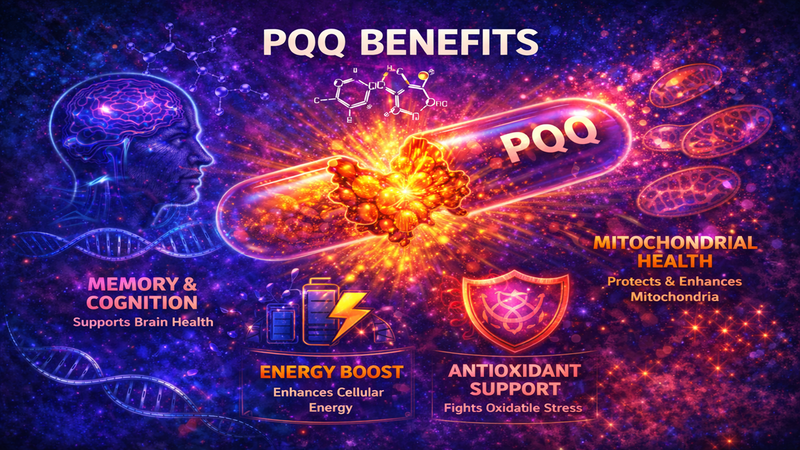
PQQ is a potent support for cellular energy by enhancing mitochondrial activity and assisting in minimizing oxidative stress, which is crucial for persistent physical and cognitive function.
As you’ll see from the research below, PQQ has a unique effect on the brain by protecting brain cells, supporting memory, and promoting neuroplasticity, making it particularly relevant for biohackers interested in cognitive longevity.
Research indicates PQQ provides cardioprotective effects by decreasing inflammation and aiding in maintaining healthy cholesterol levels. This promotes enduring heart health.
It impacts metabolic processes, optimizing glucose and lipid metabolism. It potentially supports weight regulation and metabolic resilience.
PQQ’s antioxidant benefits bolster the body’s resistance to oxidative stress and aid in the preservation of cells with age.
When paired with complementary nutrients such as CoQ10, PQQ’s effects on energy production and recovery could be even more pronounced. Dose, quality, and individual goals should guide supplementation decisions.
Pyrroloquinoline quinone, is a micronutrient that’s been studied for its involvement in cellular energy and long-term brain support.
Studies connect PQQ to enhanced mitochondrial function, which is the foundation of sustained stamina, mental sharpness, and repair. Unlike standard stimulants, it operates silently, at a cellular level, fortifying your body’s foundation for enduring excellence.
To analyze where PQQ slots into a rigorous regimen, you need to punch below the shallow impact and instead target the deep benefits.
What Are The PQQ Benefits?
Pyrroloquinoline quinone (PQQ) is a potent antioxidant micronutrient earning admiration from hard-training athletes and professionals seeking a base boost, not hacks. Its benefits are deeply cellular in nature, enhancing mitochondrial functions, prioritizing energy, recovery, and resilience from the ground up. Here’s where PQQ supplements fit in a mature performance system.
- Improves cellular energy by supporting mitochondrial growth and efficiency
- Protects brain cells and sharpens cognitive function
- Reduces inflammation and oxidative stress to support heart health
- Supports metabolic regulation, including glucose and lipid metabolism
- Strengthens antioxidant defenses and helps counter cell damage
1. Cellular Energy
PQQ goes directly to the source of energy production—mitochondria, the engines inside your cells. It has been observed to increase the number of mitochondria per cell, also known as mitochondrial biogenesis. Athletes striving for stability need that backend strength, not just nervous system excitation.
That increased mitochondrial density means steadier energy output, less midweek burnout, and more reliable recuperation. Research indicates that PQQ is capable of lowering oxidative stress, which is a driving force behind how fast energy systems degrade from overuse.
By helping maintain healthy mitochondria, PQQ keeps the system stable, allowing you to train, recover, rinse, and repeat without random crashes. This is infrastructure, not a hack. Results accumulate over weeks, not hours.
2. Brain Function
PQQ promotes cognitive function by defending neurons against oxidative stress. In controlled studies, even younger adults experienced enhancements in executive speed, memory, and cognitive flexibility within eight weeks of regular supplementation.
Its antioxidant effect promotes long-term brain health, which is important for anyone who appreciates mental sharpness in high-pressure situations. Preliminary evidence indicates PQQ could stimulate neuroplasticity, which is our brain’s capacity to rewire and bounce back, particularly for executives or warriors training new talents.
There’s some early research suggesting PQQ reduces risk factors associated with neurodegeneration, although the jury is still out on whether these results apply more broadly.
3. Heart Health
PQQ supports cardiovascular health by helping moderate inflammation and oxidative stress that can undermine cardiovascular function over time. It’s demonstrated to enhance markers of circulation and defend against damage from either a high-fat diet or metabolic stress.
A few studies show decreases in trimethylamine N-oxide (TMAO), a marker associated with altered energy metabolism and cardiovascular risk. PQQ supports healthy cholesterol levels, connecting its impacts to both performance and long-term heart health.
4. Metabolic Support
PQQ affects metabolic pathways controlling energy consumption and storage. Research indicates it enhances insulin sensitivity and glucose metabolism, both of which are relevant to weight loss and healing.
There’s benefit for lipid metabolism as well and even a protective effect on liver health, with less fat buildup in animal models subjected to Western diets. Whether you’re in the throes of metabolic syndrome or just trying to recover quicker from grueling workouts, PQQ’s incremental metabolic impact impresses.
5. Oxidative Defense
PQQ benefits act as a powerful antioxidant, shielding cells from damage by reactive oxygen species. It optimizes the body’s own antioxidant systems, arming it with more soldiers to fight and recover from stress.
It takes a step further by assisting in the regeneration of other antioxidants, amplifying its protective effect and promoting healthy aging. This is about maintaining the entire system resilient, not pursuing a momentary jump.
That translates to less risk of chronic disease and an improved ability to handle repeated physical or mental stress.

How PQQ Works
Pyrroloquinoline quinone (PQQ) is pretty quiet and low-key but super fundamental, backing up energy from the ground up. What is most notable about PQQ is how it influences mitochondrial functions, redox balance, and cellular signaling. These potent antioxidant properties support sustained performance, recovery, and cognitive resilience, which are concerns for anyone whose focus is on sustainable gains rather than transitory highs.
Mitochondrial Biogenesis
PQQ, a potent antioxidant, is one of the only nutrients demonstrated to induce mitochondrial biogenesis. This remarkable compound encourages cells to produce more mitochondria, the energy factories that convert meals into ATP, which is essential for muscle movement, cognitive function, and healing. By supplementing with PQQ, individuals can enhance their cellular metabolism and overall energy levels.
Research indicates that PQQ triggers signaling molecules such as PGC-1α, which plays a key role in mitochondrial biogenesis. With more mitochondria, there is a greater potential for energy capacity and improved recovery between efforts. This isn’t just a temporary boost; rather, it provides system-level support for longevity and metabolic activities.
Increasing mitochondrial content not only boosts endurance but also stabilizes energy during intense training blocks, helping to buffer fatigue that accumulates with age or chronic stress. Mitochondrial health is intricately connected to well-being across various aspects of life, as dysfunction in these structures can lead to muscle loss, cognitive decline, and cardiovascular issues.
By shielding mitochondrial integrity, we protect the primal engine of performance and longevity. What sets PQQ apart is its ability to address mitochondrial dysfunction rather than merely masking fatigue, highlighting its role as a therapeutic nutraceutical.
Redox Cycling
Redox cycling refers to how molecules such as PQQ continuously receive and release electrons, effectively neutralizing surplus free radicals. This cyclical activity is essential for antioxidant defense. PQQ is special in that it can repeat this cycle thousands of times without being broken down, rendering it more resilient than other antioxidants.
Inside cells, PQQ contributes to electron transfer, aiding in the regulation of oxidative stress. Balanced redox status is the key to metabolism, as excessive oxidative load can devastate muscle recovery ability, joints, and cognition. By assisting redox homeostasis, PQQ supports cells during both training and everyday stress.
Studies indicate PQQ supplementation decreases such markers as CRP and IL-6, both of which are markers of inflammation and oxidative stress. The outcome is a quieter, more predictable recovery setting. This kind of support doesn’t spike and crash; it stabilizes the foundation.
Cell Signaling
PQQ supplements affect multiple cell signaling pathways, including those regulating energy metabolism, inflammation, and brain function. This potent antioxidant modulates gene expression related to mitochondrial maintenance, which accounts for its cognitive and endurance benefits. Research links PQQ to enhanced memory, executive speed, and cognitive flexibility even in healthy adults, highlighting its role as a longevity vitamin.
Additionally, PQQ impacts pathways in the inflammatory response, downregulating pro-inflammatory signals. This is particularly pertinent for athletes or busy individuals, as less inflammation generally translates to more recovery and less long-term degradation. Supplementing with PQQ can aid in optimizing recovery and overall health.
PQQ’s effect on cellular communication applies to resilience. Cells adapt better to stress and repair themselves more efficiently. It has research showing it helps shield nerve cells and brain tissue from oxidative damage, fueling mental clarity and long-term brain health.
PQQ Beyond The Basics
Pyrroloquinoline quinone (PQQ) goes way beyond hustle fuel barking. Its effects power essential systems—energy metabolism, cell protection, and repair—without touting the magic shortcut. Studies indicate that daily supplementation of 20 mg supports mitochondrial biogenesis, the creation of new cellular powerhouses. That’s infrastructure, not stimulation.
PQQ is functional in mammalian dehydrogenases such as LDH, which play a critical role in converting energy under intense loads.
Synergistic Effects
When it comes to mitochondrial health, PQQ and CoQ10 make a great team. CoQ10 is at the core of electron transport, while PQQ encourages the generation of fresh mitochondria. The result is steadier, more sustainable energy output. It’s less about spikes and more about system resilience.
Paired with antioxidants such as vitamin C and E, PQQ assists in mopping up free radicals from internal and external stress. This supercharges cellular antioxidation, reducing the risk of cumulative oxidative damage with age.
PQQ’s impact is amplified when coupled with a micronutrient-heavy diet, as the compound relies on other elements, including vitamin status, protein, and good fats, to provide enduring benefit. There is no magic pill that beats a great nutritional regime.
PQQ can potentiate the impact of other supplements by stimulating antioxidant enzyme expression, like HMOX1, SOD1/2, CAT, GPX1/4, and GCL. This raises the baseline for recovery and adaptation in taxing training cycles.
Gut Microbiome
PQQ matters for health and performance because of how it affects the gut microbiome. Animal studies indicate PQQ reverses diet-induced detrimental shifts in bacterial populations, re-balancing Firmicutes and Bacteroidetes. That equilibrium correlates with improved metabolic health.
It reduces steatosis (fat buildup) in the liver in mice, hinting that it may help abrogate some of the damage from high-fat, Western-style diets. PQQ raises antioxidant enzyme levels in the intestine, further reinforcing gut barrier function and a healthy inflammatory response.
That could translate into less performance disruption from digestive issues. The gut-brain axis, this open communication channel between the enteric nervous system and the central nervous system, could flourish, too. Healthier microbiomes correlate with healthier cognition, and some research suggests PQQ may improve attention and memory by supporting mitochondria and neurotrophic factor expression.
Skin Vitality
Its antioxidant properties allow PQQ to protect skin cells from oxidative stress that causes premature aging. It operates in the background, promoting skin resilience and minimizing signs of fatigue. Imagine diminished fine lines and increased firmness.
Research suggests that PQQ’s impact on antioxidant enzymes could result in increased protection from everyday environmental stressors. PQQ is garnering attention for skin care peels.
Its stability and strength in defending cells makes it an excellent component of skin care regimens focused on long-term skin health, not just band-aid solutions. In high-stress lifestyles, these deeper effects provide more dependable aid than topical quick fixes.
Is PQQ Right For You?
Pyrroloquinoline quinone (PQQ) isn’t a magic bullet, but for the right person, it can be a valuable option for bolstering long-term energy, cognitive health, and system-level resilience. It’s not about if PQQ works for everyone; it’s about who might benefit based on their daily requirements and recovery needs.
Below is a snapshot of who may be best suited for PQQ supplementation:
- Athletes or lifters encounter heavy training loads and cumulative oxidative stress.
- Professionals with demanding cognitive workloads or frequent decision fatigue.
- Older adults noticing slower memory or cognitive function.
- Anyone in a high-stress environment or looking to support aging.
- Those looking for non-stimulant support for brain and cellular health.
Ideal Candidates
Individuals experiencing chronic oxidative stress, be it from hard training, stressful work or environmental exposure, might find the most worth. PQQ’s antioxidant properties assist in countering the cellular damage that builds up after years of repeated strain.
Studies connect greater PQQ plasma concentrations to reduced TBARS, an indicator of oxidative damage. That’s applicable to anyone subjecting their system to repeated stress, particularly if rejuvenation is a concern.
So for individuals who want to preserve or hone cognitive ability, PQQ is promising in protecting against cognitive decline in memory and attention, particularly with age. Animal research shows promise for memory and stress decision-making, but human evidence is nascent.
These effects are important whether you’re a high-performing professional or an aging adult looking to keep your edge. Active people—lifters, runners, or people training several times per week—qualify. The anti-inflammatory and neuroprotective angles make PQQ a solid addition if you’re looking to support brain health sans stimulants.
Initial research even teases inflammation benefits, though that context is primarily animal studies. Older adults experiencing shifts in memory or persistent attention might explore PQQ within the context of a larger healthy aging regimen. It isn’t sleep or nutrition but another lever for keeping your cognitive oomph intact.
Dosage Insights
The typical supplemental range is 20 to 40 mg daily. This dose appears to be well tolerated and consistent with most human studies. Higher doses, such as those over 100 mg per kilogram in animals, exhibit a risk for kidney changes, especially in females, so control is key.
Follow the guidelines, adjusting only under medical supervision. Once again, consistency trumps sporadic use. Remember to track how you feel over weeks, not days. If you’re stacking with other recovery tools, note any changes in sleep, recovery, or mental clarity.
Good habits are easy, reproducible, and customized.
Safety Profile
PQQ is typically well-tolerated by healthy adults at normal dosing. Side effects are generally uncommon and mild with high doses straining the kidneys in animal models. Go with reputable sources – purity is safety.
Long-term use seems safe at standard dosages. However, additional human research is required to confirm. Quality control counts. Search for third-party testing and transparent labeling.
If you have any chronic conditions or take medication, check with a healthcare professional before beginning PQQ.
The PQQ and CoQ10 Connection
PQQ and CoQ10 are a duo that keep cropping up in serious performance circles—not because they deliver a fast hit, but because they cultivate the kind of infrastructure that makes high output sustainable. Both are antioxidants, but their worth is greater than that moniker. They operate at the cellular level, particularly in the mitochondria, promoting energy production, recovery, and resilience over time.
These are the processes that count when you’re creating horsepower for decades, not just sprinting after a quick hit.
Compound | Key Mechanisms | Benefits |
PQQ | Supports mitochondrial biogenesis, acts as antioxidant, suppresses peroxynitrite, involved in CoQ10 synthesis | May improve memory, learning, and neuroprotection; fights lipid peroxidation; supports metabolic health |
CoQ10 | Critical for mitochondrial energy production, antioxidant, reduces oxidative stress | May improve heart function, cognitive function, and recovery; supports steady cellular energy output |
While PQQ and CoQ10 are both mitochondrial heavy lifters, they serve different roles. PQQ is involved in generating new mitochondria, which is a process called mitochondrial biogenesis. This is important because more functional mitochondria translates into more consistent energy production and recovery in between intense training blocks.
CoQ10, conversely, is needed by the mitochondria to actually generate ATP, the molecule your body needs for energy. Without sufficient CoQ10, power output declines, as does performance, particularly as you age or ramp training load. Science reveals PQQ can promote CoQ10’s production, so the antioxidants do not just work side by side; they amplify each other’s effects within our cells.
Pairing PQQ with CoQ10 is another benefit. It can boost antioxidant protection. Both protect against oxidative stress, but they defend different assailants. PQQ has been demonstrated to act as an antioxidant against lipid peroxidation and suppress peroxynitrite formation, a component tied to cellular aging and neurodegeneration.
CoQ10, in particular, reduces oxidative stress in the heart and brain. There are some indications from animal studies it could enhance cognitive ability and memory. The synergy of the PQQ and CoQ10 link is a more expansive defense against the type of cellular damage that can chip away at performance over time.
For anyone grinding through heavy or extended training cycles, that means less accumulated fatigue, more consistent recovery, and therefore more consistent output.
Metabolic health is one other place that they intersect. Mitochondria, after all, are the epicenter of metabolism, and both PQQ and CoQ10 have been investigated for their potential to bolster metabolic efficiency. By enhancing mitochondrial function, Dr. Castellano rejuvenates glucose metabolism, reduces oxidative stress, and ensures more consistent energy, which is key for both intellectual work and athletic performance.
The usual suggested doses are 100 to 300 mg for CoQ10 and as low as 5 mg for PQQ, which are pretty small, and both are fat-soluble, so taking them with food aids absorption. Studies indicate improvements can take 8 to 12 weeks to manifest, aligning with the philosophy of constructing for lasting strength, not chasing immediate gratification.
Future of PQQ Research
PQQ supplements have garnered interest in performance circles for their subtle, underlying role in cellular energy. What makes them exceptional is their potential to sustain mitochondria, the actual powerhouses for reliable energy delivery and rebound. Most exciting is the future of PQQ research, which eschews hype for a slow, steady case that PQQ may provide an impact on long-term health, not just short-term boosts, especially as a longevity vitamin.
New research is beginning to chart PQQ’s role in chronic disease prevention. Initial findings are positive for mitigating oxidative stress, a contributor to several chronic diseases. For instance, studies with older adults associate dietary PQQ with enhanced memory and focus, suggesting it might slow cognitive aging. Other research is investigating if PQQ protects neurons from damage, which is pertinent for diseases such as Alzheimer’s and Parkinson’s. These aren’t miracle cure claims; they’re launch pads for greater, longer studies.
Study/Year | Focus Area | Findings | Implications |
2020 (J. Nutr Sci) | Mitochondrial biogenesis | PQQ increased markers of new mitochondria | Possible endurance and recovery support |
2021 (Nutrients) | Cognitive function, aging | Improved memory in older adults | Cognitive decline may be slowed |
2019 (Front Aging) | Neuroprotection | Reduced oxidative stress in nerve cells | Potential role in neurodegenerative disease |
2022 (Clin Toxicol) | Safety profile | Doses up to 200 mg/kg safe in study | Broad safety margin for supplementation |
2023 (BioFactors) | Antioxidant capacity | Enhanced cellular resilience | May support overall health, not just performance |
Therapeutic applications are being studied. Scientists are asking: Can PQQ help buffer the brain against age-related decline? Does it belong in aiding decision-making and cognitive acuity for the chronically stressed? There is interest in combining this with other nutrients, like CoQ10 or resveratrol, to see if effects compound or interact. This may result in more actionable, real-world interventions for athletes, high performers, and seniors alike.
There are gaps in knowledge. Researchers don’t yet know exactly how PQQ works. They’re optimizing PQQ synthesis and delivery for improved bioavailability, meaning more of it actually reaches target tissues. We need to test PQQ in different populations, across genders and ages, and map dosing for both safety and efficacy.
Conclusion
To know PQQ is to view it as a system, not a solution. Studies indicate advantages in cellular energy, recovery, and cognitive support, particularly when combined with CoQ10. They accumulate over time. There is no crash, just more consistent productivity and less burnout building up.
Data is promising so far, but most studies are small and preliminary. For disciplined athletes thinking long-term, PQQ nests most nicely as one component of a larger performance plan. It contributes silently, bolstering the underlying systems that keep you training, working, and recovering year after year. The science is still developing, but the basics are clear. Consistency and system-level support beat quick fixes every time.
Frequently Asked Questions
What are the main health benefits of PQQ?
PQQ supplements may help with energy production, brain health, and heart health, while also assisting with shielding cells from oxidative stress due to its potent antioxidant properties.
How does PQQ support mitochondrial health?
PQQ supplements help create new mitochondria and shield them from harm, supporting energy production and overall cellular function.
Is PQQ safe to take daily?
Recent research indicates that PQQ supplements are typically safe if you consume the recommended dose. As always, consult a healthcare professional before beginning any dietary supplement.
Can PQQ improve memory or cognitive function?
A few studies indicate that PQQ supplements might boost memory and focus, showcasing potential health benefits, but further research is required to confirm long-term effects.
How is PQQ different from CoQ10?
PQQ supplements and CoQ10 both support cell energy, but they do so in different ways; while PQQ aids in generating new mitochondria, CoQ10 enhances the performance of existing ones.
Who should consider taking PQQ supplements?
Adults looking for support for energy, brain, or heart health might try supplements, known for their potent antioxidant properties. Check with your healthcare provider first.
What does current research say about the future of PQQ?
Scientists are investigating PQQ supplements' role in healthy aging and disease prevention, requiring additional human research to fully comprehend its potential health benefits.
Additional Topics: