
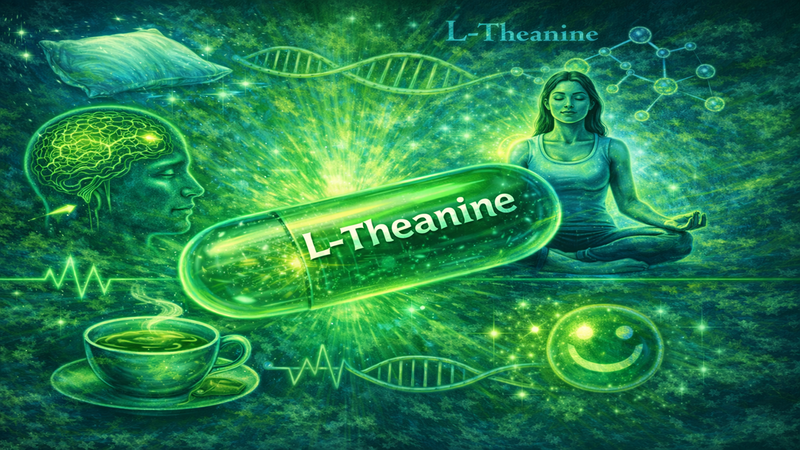
What is L-Theanine Good For Aside From Sleep?
Key Takeaways
- L-theanine promotes relaxed alertness, alleviating nervousness and stress without sedation. This is beneficial for stressful environments.
- It hones focus and mental clarity, particularly when combined with caffeine. It provides consistent wakefulness with less nervous energy.
- L-theanine can improve sleep quality by relaxing the mind, leading to quicker sleep onset and more restorative sleep.
- Theanine can help balance mood by supporting neurotransmitters involved in emotional equilibrium, with potential advantages for anxiety, irritability, and focus issues.
- While natural sources such as green tea may contain L-theanine, supplements offer greater dosing control and convenience. Start low and work your way up for optimal results.
- L-theanine is well tolerated, with minimal side effects, and may support heart health and brain protection over the long term.
L-theanine is an amino acid that naturally occurs in tea leaves, recognized for promoting mental relaxation without inducing drowsiness. It is a powerful nootropic that research shows can support calm focus and a stable mood, particularly during periods of stress or intense work. Many well-trained athletes reach for L-theanine to buffer the jitters of caffeine, enhancing focus while still attending to anxiety. Understanding how L-theanine works can help it fit into a well-designed performance and recovery system over the long term.
What is L-Theanine Good For?
L-theanine is an amino acid found mainly in green tea, known for its calming effects and potential health benefits. Its magic is not about quick fixes or hype; instead, it nurtures your nervous system and cognitive function, making it a beneficial supplement for enhancing mental clarity and focus.
1. Calming Stress
L-theanine, a popular theanine supplement, cuts cortisol, your body’s primary stress hormone, enabling you to adeptly handle daily stress while maintaining mental clarity. Unlike sedatives, it doesn’t fog your mind or put you out. You remain alert, but typical anxiety spikes are subdued—this state is often referred to as “relaxed alertness.” This is particularly beneficial in high-stress moments, like presenting or managing an emergency at work, where poise is as valuable as vigor. That’s why some stress-relief products include L-theanine; it’s an easy way to relax without sacrificing focus or alertness.
2. Sharpening Focus
L-theanine shines when paired with caffeine, as this theanine supplement helps smooth caffeine’s effects, providing concentration without the typical crashes or jitters. This makes it useful for activities that require deep focus, like programming, strategy, or extended study. The brain fog lifts, enhancing cognitive performance and mental clarity, allowing you to screen out distractions more effectively, especially in anxious situations.
3. Improving Sleep
For those who have difficulty relaxing at night, theanine benefits include helping quiet racing thoughts and lowering resting heart rate. This calming effect promotes relaxation without sedation, helping you drift off to sleep naturally. Research shows that taking l-theanine in daily doses of 200 to 900 mg improves sleep quality and duration, even in individuals with chronic insomnia. Enhanced REM sleep, which is crucial for recovery, can also be achieved, making the theanine supplement a valuable addition to your nighttime routine.
4. Stabilizing Mood
L-theanine, a popular theanine supplement, affects neurotransmitters such as serotonin and dopamine, both of which are involved in mood regulation. It can be beneficial for individuals who are irritable, emotionally unstable, or have chronic anxiety. Tiny studies hint at emotional and resilience benefits, showcasing its potential health benefits in mild anxiety or ADHD management. Its effect is gentle and fosters calm persistence rather than wild swings, aligning with the needs of those pursuing sustainable equilibrium.
5. Supporting Cognition
L-theanine may benefit older adults and those concerned about cognitive decline, as its calming effects may enhance mental clarity. It demonstrates neuroprotection, potentially reducing dementia risk and maintaining cognitive acuity. There is data on improved verbal fluency and cognitive test results, especially in pressurized environments. Taken daily as part of a comprehensive strategy, this theanine supplement can bolster cognitive health and performance without overstimulation.
The L-Theanine and Caffeine Synergy
L-theanine is not merely a focus hack; it acts as a prop, especially for those who strategically use caffeine. While few individuals reach for L-theanine for the same reasons, it is the best antidote to caffeine’s drawbacks, smoothing the energy roller coaster associated with caffeinated beverages. This non-stimulant amino acid, most prevalent in green tea, works synergistically with caffeine by counteracting overstimulation while preserving its benefits, offering significant theanine benefits.
Caffeine alone tends to agitate the nervous system by blocking adenosine, which hones reaction time and temporarily boosts mood and performance. However, large doses—such as those in energy drinks or giant coffees—often lead to jitters, shakiness, or the dreaded afternoon crash. Here, L-theanine helps calm these spikes by increasing alpha brainwave activity, supporting calm focus rather than jittery energy. Consequently, this results in smoother energy levels, longer-lasting mental clarity, and fewer crashes as the caffeine wears off.
Recent research has clarified this beneficial effect. Several studies indicate that the combination of L-theanine and caffeine enhances cognitive performance more than either substance alone. A commonly cited dose of 97 mg of L-theanine paired with 40 mg of caffeine has helped subjects concentrate more effectively on demanding tasks. Improvements in accuracy, reduced mental fatigue, and lower task-switching costs were observed, with effects lasting 5 to 9 hours in some experiments. For instance, an fMRI study found that participants responded more quickly to visual cues, while another study reported higher cognitive scores among individuals with attention-deficit/hyperactivity disorder (ADHD).
Here’s a quick summary of how the two ingredients interact:
Effect | Caffeine Alone | L-Theanine + Caffeine |
Onset of alertness | Fast | Fast |
Jitters/restlessness | Common | Rare |
Crash/rebound fatigue | Frequent | Reduced |
Focused attention | Moderate | High |
Task accuracy | Improved | Significantly improved |
Mind-wandering | Often increased | Suppressed |
Duration of effect | 2–4 hours | 5–9 hours |
Incorporating a theanine supplement into your routine can yield numerous potential health benefits, particularly for those looking to improve cognitive function and manage stress. By understanding the interactions between L-theanine and caffeine, individuals can harness their combined effects for enhanced focus and clarity, especially in stressful situations.
Natural Sources Versus Supplements
L-theanine is most famously known as the relaxing compound in tea leaves, particularly green tea and matcha. It’s found in other teas as well, such as black and oolong. Matcha green tea is notable for its elevated L-theanine content, typically 20-40 mg per gram of dried powder. When consumed, polyphenols and catechins, along with other phytochemicals, interact synergistically, producing effects that promote mental clarity and reduce the risk of overstimulation or erratic side effects.
Supplements offer accurate dosing and convenience. Capsules and powders typically provide 100 to 400 mg per serving, making it easy to control your intake or accommodate those who don’t enjoy the taste of tea. Most L-theanine supplements on the market today are synthetic isolates. This means that the compound may have a different chiral ratio of D-theanine to L-theanine compared to what’s naturally occurring in tea. Some studies suggest that these unnatural ratios may be less effective or even harmful, underscoring the importance of choosing a high-quality theanine supplement.
Tea leaves contain more than just L-theanine. The polyphenols and catechins in green tea, often absent from isolates, may enhance or even be essential for L-theanine’s relaxing and attention-enhancing properties. This beneficial effect is frequently lost in many supplements. Consuming a few cups of tea daily is unlikely to cause adverse effects, as the body absorbs L-theanine slowly. Natural sources generally keep intake below 200 mg per day, unless one is consuming excessive amounts of matcha.
While supplements provide convenience, the industry lacks strict regulation. This can lead to inaccurate labels and varying potencies. Research indicates that doses above 500 mg per day may hinder gut healing or cause other adverse effects. Most adults seeking the benefits of theanine without risk should aim for a total daily intake of 200-500 mg, a target easily achieved through both supplements and natural sources.

Finding Your Ideal Dosage
Dialing in the proper L-theanine dosage requires nuance. There’s no one-size-fits-all answer, and that’s intentional. The aim isn’t to pursue a rush or shortcut, but to underpin steady tranquility, concentration, and recharge without jarring your system. Most disciplined athletes and professionals will prefer a dosage that fits easily into their routine, minimizes risk, and enables their long-term ambitions. The theanine benefits extend beyond just relaxation; they include enhanced mental clarity and focus, making it an ideal supplement for various lifestyles.
Start low and build up slowly.
Most studies report doses ranging from 97 to 250 mg per day, and many users experience noticeable effects at around 200 mg. If you’re new to L-theanine, starting with a daily dose of 100 mg is reasonable. Record how you react—mind and body. If you don’t notice an effect after several days, you can increase by 100 mg increments. For instance, a person starting at 100 mg would increase to 200 mg if they’re not seeing any effect, and so on, until reaching a typical ceiling of 400 mg per day. This incremental process helps you identify the lowest effective dose and minimize the risk of theanine side effects.
Pay attention to individual factors.
Your body weight, sensitivity to supplements, and primary motivation for L-theanine use all play a role. A bigger athlete might need a bigger dose to see gains. Someone using L-theanine to manage anxiety or stress might find a different sweet spot than someone aiming only for smoother focus during work or training. It’s not about the highest number; it’s about what feels right for your system. Be honest with yourself — if you’re stacking L-theanine with caffeine or taking it later in the day, you may need to tweak your dosage.
Consistency beats single-use.
L-theanine’s effects are cumulative. Taking it haphazardly or just in hyper-stress moments won’t have the same impact as a consistent daily regimen. Most disciplined users pick a daily time—morning with coffee or early afternoon—to anchor the habit. This consistency enables you to evaluate the impact accurately and adjust accordingly. If you’re using it for training, recovery, or sleep quality, place it near your routine to maximize its therapeutic potential.
Respect the upper limit.
Although a few smaller short-term studies use higher doses, the general recommendation is not to exceed 500 mg daily. Larger doses may provide diminishing returns and run up the risk of side effects such as headaches or digestive upset. More is not better; restraint is maturity. If your ideal dose falls between 200 and 400 mg, that aligns with most research and anecdotal experience with theanine products.
Potential Side Effects and Interactions
L-theanine is a no-brainer ingredient, as it’s low risk for disciplined athletes who prioritize consistent performance over short-term gains. Its safety history is solid, but nothing is risk-free. Even basics like water, rest, or protein can boomerang if misapplied. The theanine benefits lie in its subtlety of system support, making it essential to understand where caution is appropriate.
Most commonly reported side effects in clinical studies and in clinical experience are mild and uncommon. Most users report no issues; however, possible effects include mild symptoms. These symptoms are rarely serious, and in large trials, there’s no significant difference between L-theanine and placebo groups. This is significant; it is not a factor that disrupts schedules or healing. In studies where L-theanine was combined with antipsychotics or other medications, side effects continued to be minimal, showcasing its potential health benefits.
- Nausea
- Abdominal pain
- Headache
- Irritability
- Diarrhea
- Constipation
Anyone who manages a lean machine understands that interactions count. L-theanine can interact with psychotropic drugs, such as antidepressants and antipsychotics. Although the data so far is reassuring, with no significant adverse effects reported, there’s not enough evidence to exclude all risks. Anyone taking prescription medications, particularly those affecting the brain, should consult a doctor before introducing a theanine supplement. The ingredient’s calming effects can be additive or antagonistic to other substances, and that’s not something to leave to chance.
Anyone who manages a lean machine understands that interactions count. L-theanine can interact with psychotropic drugs, such as antidepressants and antipsychotics. Although the data so far is reassuring, with no significant adverse effects reported, there’s not enough evidence to exclude all risks. Anyone taking prescription medication, particularly those affecting the brain, should consult a doctor before introducing L-theanine. The ingredient’s calming action can be additive or antagonistic to other substances, and that’s not something to leave to chance.
Regarding dosage, most protocols recommend a daily dose of 200 to 450 mg. That’s a reasonable timeframe grounded in research, not advertising claims. Long-term safety data is still emerging, so err on the side of caution. Treat it as infrastructure—good when it suits, redundant if too much, and never the base of the pyramid. The benefits of this dietary supplement are significant, especially when used correctly.
In summary, L-theanine offers a range of benefits, especially when combined with caffeine, making it a favored choice among athletes and those seeking mental clarity. However, understanding how L-theanine interacts with other medications is crucial to safe and effective use.
L-Theanine's Emerging Roles
L-theanine stands out for what it doesn’t do: it doesn’t overstimulate, doesn’t promise quick fixes, and doesn’t disrupt your system’s natural rhythms. Instead, it’s an assistive technology—one with growing evidence of potential health benefits, especially for those interested in calming effects and cognitive enhancement rather than the fast and flashy.
Blood Pressure
- Studies indicate that L-theanine may help lower blood pressure, particularly in individuals with elevated readings. In stressful environments, its calming effect can blunt acute blood pressure spikes, which is critical for individuals whose workouts or work routinely activate their stress response. This isn’t just theoretical; single doses of approximately 200 mg have been shown to lower resting heart rate, an indicator that the body is shifting into a more relaxed state.
- The compound’s relaxation benefits aren’t sedative. They’re about shifting the nervous system toward equilibrium. Lower resting heart rate and reduced stress-induced volatility are nuanced but significant shifts for cardiovascular health.
- Several studies show that L-theanine can buffer stress-induced increases in blood pressure. This is important for lifters, professionals, and anyone working under sustained pressure. Mitigating these spikes over time may reduce cardiovascular risk.
- For those unwilling to turn to meds alone, L-theanine is a natural complement that bolsters the system without overwhelming or camouflaging the root problem. It is a good fit for proactive stress managers seeking mild, research-supported heart support.
Neuroprotection
L-theanine’s neuroprotective effects begin with its antioxidant potential. It protects brain cells from oxidative stress, which contributes to aging and neurodegenerative disease. Animal and cell research hint it could prevent or slow diseases like Alzheimer’s by protecting neurons from damage. Preliminary data support neurogenesis in the hippocampus, which may help preserve or even enhance memory encoding and cognitive robustness with aging.
Other research shows L-theanine increases brain-derived neurotrophic factor (BDNF), a protein associated with cognitive function and neural longevity. This is far beyond merely a short-term cognitive hack. It’s about sustaining function over decades, not hours. Seniors might get more help, but the point—preserving what you exercise for—resonates with anyone who treasures their lifelong cognitive advantage.
Adjunct Therapy
L-theanine for chemotherapy patients, as early research such as this study indicates, has the potential to relieve anxiety and improve quality of life during treatment. There’s interest in how it can synergize with existing drugs, potentially amplifying benefits without introducing side effects. Its soothing effects can be particularly useful when traditional medications dampen affect or induce anxiety.
Mental health applications go even further. L-theanine’s potential to enhance positive affect, decrease reaction times, and sustain attentional performance under stress is demonstrated. Not all studies report significant effects relative to placebo. Still, for hard-nosed high performers, even small advantages in stress management and mood can add up to improved reliability and recuperation.
So What Is L-theanine Good For? Conclusion.
L-theanine deserves honor for its consistent, reliable impact profile. Studies demonstrate that it promotes clearer thinking, easier concentration, and a gentler stress response without sleepiness or foginess. The synergy with caffeine stands out: sharper attention, less jitter, and fewer performance dips. L-theanine is well-tolerated at moderate doses, with infrequent side effects when used judiciously. Dietary sources such as green tea provide trace amounts, while supplements provide more reliable, quantifiable doses.
The new sleep and emotional regulation data are promising, but not a shortcut. For dedicated lifters and hacks, L-theanine is a silent aid, enhancing your everyday grind and recharge without fuss or jitteriness. The benefits build over weeks, not hours.
Frequently Asked Questions
What are the main benefits of L-theanine?
What is L-theanine good for? Other research indicates that theanine benefits include promoting sleep and enhancing mental clarity, particularly when consumed with caffeinated beverages.
How does L-theanine work with caffeine?
L-theanine can counteract the stimulating effects of caffeine, and theanine benefits include increased focus and alertness while reducing anxiety and jitters often caused by caffeinated beverages.
Is L-theanine naturally found in foods?
Yes, L-theanine, a beneficial amino acid found primarily in green tea, is often taken as a theanine supplement to enhance mental clarity and cognitive function.
What is a typical dosage for L-theanine supplements?
Most research suggests that taking a theanine supplement in doses of 100 to 200 mg a day can enhance mental clarity. Begin with a low dose and work with your doctor to determine what is right for you.
Are there any side effects or risks with L-theanine?
L-theanine is safe overall and offers several benefits. Mild side effects may include headaches or dizziness, so if you’re on medication or have health issues, talk to a physician before taking a theanine supplement.
Can L-theanine help with sleep?
Several studies have reported that L-theanine, a popular dietary supplement, can improve sleep quality by promoting relaxation and providing calming effects. It’s not a sedative; rather, it helps prepare the mind for sleep.
Who should avoid L-theanine supplements?
Pregnant or breastfeeding people and those with medical conditions should consult a healthcare provider before taking l-theanine supplements, as the theanine benefits may interact with specific medications.
Additional Topics: