
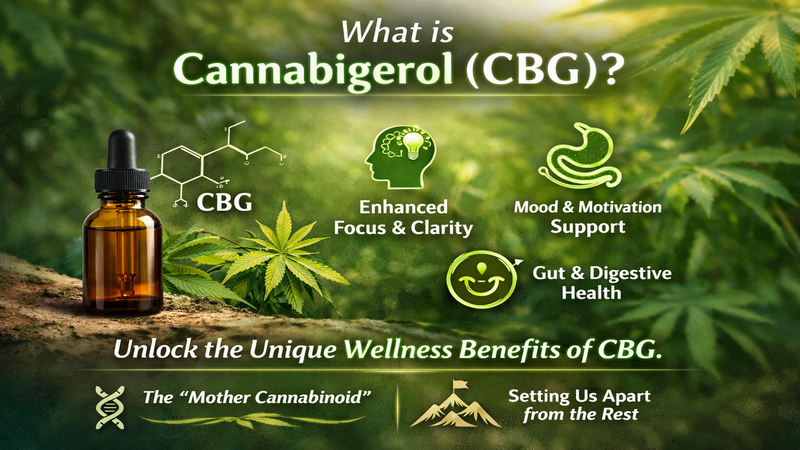
What is cannabigerol (cbg) and its potential benefits
Key Takeaways
So what is cannabigerol? Let's look at the key takeaways first.
- Cannabigerol is a non-intoxicating “mother cannabinoid” that forms from CBGA and helps generate other cannabinoids like THC and CBD while directly interacting with CB1, CB2, and other receptors in the endocannabinoid system. It’s more of an upstream regulator than an effect molecule.
- Preliminary studies indicate that CBG could promote brain health, reduce inflammation, and assist in modulating pain, with further indications for appetite, hormonal activity, and potential anticancer benefits. These results are encouraging, but so far still largely preclinical and early human data.
- CBG is a partial agonist at CB1 and CB2 and targets channels like TRPV and receptors like 5-HT1A, providing it a wide, but somewhat mild, pharmacological profile. Available data show little to no psychoactive or “drug liking” effects relative to THC.
- Unlike THC and CBD, CBG is non-intoxicating, seems less sedating, and might have a different combination of anti-inflammatory, neuroprotective, and pain-modulating effects. Consider it more of a supplement to other cannabinoids than an alternative.
- When selecting CBG products, see independent lab reports for CBG, CBD, and THC levels, look for contaminants, and align the product form (tincture, vaporized, edible, or flower) with your objective and preferred onset time. Talk to your doctor about potential drug interactions, particularly if you take other medications or cannabinoids regularly.
- Moving forward, work will probably turn toward controlled human trials, long-term safety and optimized dosing, and CBG derivatives and analogs for specific conditions, such as chronic pain, inflammation, and neurodegenerative disease. Until then, tread carefully with CBG, monitor your reaction, and view it as one tool in an overarching wellness and recovery plan.
What is cannabigerol is a frequently asked question as more consumers look beyond CBD and THC. Cannabigerol (CBG) is a non-psychotropic cannabinoid found in the cannabis plant that serves as a biochemical precursor to many other cannabinoids. Preliminary research ties CBG to potential roles in inflammation, gut health, and nervous system homeostasis.
All of these aspects captivate the attention of performance-oriented consumers. Below, we demystify how CBG works, where it fits, and what the existing research actually supports.
What is Cannabigerol?
What is Cannabigerol? Cannabigerol (CBG) is a non-psychoactive cannabinoid found in the Cannabis sativa plant. It doesn’t induce a “high,” which differentiates it from THC for anyone who requires lucid thinking during work, workouts, or while driving. Often referred to as the “mother cannabinoid,” CBG serves as a precursor to several cannabinoid compounds, such as THC and CBD, derived from it within the plant.
Chemically, CBG is a phytocannabinoid, a plant-derived compound that can interact with the human endocannabinoid system. In the raw plant, it is found primarily as cannabigerolic acid (CBGA), its acidic precursor. With heat or time, CBGA loses a carboxyl group through decarboxylation, transforming into CBG. That same CBGA pool can be transformed into THCA, CBDA, and others, which then decarboxylate into THC and CBD. Put simply, CBGA is the mutual origin, and CBG is one of the immediate products.
Inside the plant, enzymes determine where CBGA ends up. Specific synthase enzymes convert CBGA into THCA, CBDA or other acidic cannabinoids. When the plant matter is heated, such as when it is extracted or vaped, those acidic forms decarboxylate back into the neutral cannabinoids most are familiar with. Because so much CBGA is siphoned downstream into THC and CBD, most strains are naturally low in CBG unless specifically bred or processed to retain it.
In the body, CBG binds to CB1 and CB2 receptors in the endocannabinoid system, which helps modulate mood, pain, inflammation, and stress response. Preliminary studies and anecdotal feedback suggest that CBG could provide therapeutic effects, such as pain relief and anti-inflammatory assistance, making it a great option for muscle aches and overall recovery. Other evidence indicates decreased anxiety and stress in healthy volunteers. Side effects, when they occur, tend to be mild: dry mouth, dry eyes, sleepiness, or increased appetite.
Potential Therapeutic Benefits

Cannabigerol (CBG) sits in an interesting lane: early data suggest real therapeutic potential without the overstimulation or “big high” typically associated with cannabis use. For a performance/longevity enthusiast, it sounds less like a shortcut and more like an under-evaluated support compound. The pharmacological potential of CBG is particularly noteworthy as it does not induce the intoxicating effects that many psychoactive cannabinoids do.
Preclinical work indicates CBG's neuroprotective effect, as it seems to bolster nigral dopaminergic neurons and suppress neuroinflammatory responses, both relevant to conditions such as Huntington’s and Parkinson’s disease. Its minimal affinity at CB1 and CB2 receptors in human cells may explain its capability to modulate the endocannabinoid system without causing significant psychoactive effects or noticeable neurological side effects. A human study found that CBG reduced subjective anxiety and stress in healthy cannabis users, with no motor or cognitive impairment, which is rare for a cannabinoid and appealing for those who prioritize sharp decision-making.
Inflammation is another target. CBG inhibited inflammatory cytokine expression and lowered inflammatory proteins in inflammatory bowel disease models, as well as other gut inflammation. This coincides with reports of improved GI comfort and reduced cramping. It has antibacterial properties, including against Streptococcus mutans, paving the way for oral and systemic use non-dependent on immune overactivation.
On the pain side, CBG exhibits antinociceptive properties, which probably stem from modulation of endocannabinoid signaling and not brute-force sedation. It alleviated pain in models of chemo-induced peripheral neuropathy, where nerve pain is notoriously difficult to treat without numbing the entire system. In surveys, 51% of users say they take CBG for anxiety and 78% grade it as better than their typical anxiety meds, though that’s self-report, not controlled data.
CBG has also been investigated as an appetite stimulant, androgen receptor antagonist, and anticancer agent in colon carcinoma and glioblastoma models, particularly in combination therapy. The diverse therapeutic effects of CBG underscore its promise within the legal cannabis market and its potential as a valuable cannabinoid compound in future research.
The Science Behind CBG
CBG sits upstream in the cannabinoid family. Its behavior in the body is unique and more nuanced than THC or even CBD. It favors support, not stimulation, which aligns with a long-term performance mindset.
CBG displays partial agonist activity at both CB1 and CB2 receptors, similar to the endocannabinoids anandamide and 2-arachidonoylglycerol. It nudges these systems rather than flooding them, which could help explain why users experience calm and focus without feeling stoned. Mouse CB1 and CB2 receptors are approximately 66% and 78% homologous overall and in the transmembrane regions, respectively, so CBG can engage both, bringing central (CB1) and peripheral/immune (CB2) pathways together. CBG interacts with transient receptor potential vanilloid (TRPV) channels, which play a role in pain, temperature, and inflammatory signaling—again, more fine-tuning than muscle.
Pharmacokinetics are still being mapped, and key properties are emerging:
- Oral doses of approximately 20 mg of hemp-derived CBG can reduce stress reactivity in cannabis users.
- CBG seems to have a fairly rapid onset when inhaled and a more gradual curve when consumed orally.
- Like other cannabinoids, it is highly lipophilic, distributes into fatty tissues, and is metabolized in the liver.
- The peak subjective effects are mild and short-lived, with minimal residual impairment reported.
Human data tracks that profile. In healthy cannabis-using adults, CBG decreased acute subjective anxiety and stress in the absence of intoxication, motor or cognitive impairment, or other pronounced drug-like effects. Survey data echo this: 51% of CBG users report using it for anxiety, and 78% of those say it feels more effective than their conventional anxiety medications. That doesn’t replace good medical care, but it points to a new type of instrument—subtle modulation instead of sedation or emotional numbing.
Mechanistically, CBG seems to regulate endocannabinoid tone, affect inflammatory gene expression, and engage with 5‑HT1A (serotonin) receptors. This multi‑receptor profile may explain accounts of a more even stress response, smoother mood, and reduced anxiety. It has antimicrobial activity in vitro, with CBG‑related compounds exhibiting action against specific microbes. Its partial agonist behavior means it can modulate Δ9‑THC effects through additive, synergistic, or even opposing functioning, which is applicable to people already using cannabis and attempting to keep their head clear for workouts, decisions, and sleep.
CBG vs. Other Cannabinoids
CBG occupies a different position than the cannabinoids most are familiar with. It is the “parent” compound in young cannabis plants, which is subsequently transformed into THC, CBD, and others. Hence, it is rare in mature plants and more difficult to harvest at scale.
CBG, when compared with THC, is non-intoxicating. It doesn’t get you the traditional “high,” but it sounds more invigorating and focus-based, where THC is psychoactive and CBD often feels more relaxing or even soporific for people. Unlike CBD, CBG has a different chemical structure and binds more directly to CB1 and CB2 receptors and even CB1–CB2 heteroreceptor complexes, which probably accounts for some of its unique effects.
Cannabinoid | Psychoactive | Main receptor profile | Notable activity |
CBG | No | CB1, CB2, CB1–CB2 complexes, others | Stimulating, anti‑inflammatory, strong antibacterial |
THC | Yes | Partial agonist at CB1, CB2 | Euphoria, pain relief, appetite, impaired cognition |
CBD | No | Low direct CB1/CB2; indirect modulation | Anxiolytic, anticonvulsant, sedative tendencies |
CBC | No | Possible TRP channels, weak CB interactions | Anti‑inflammatory, potential mood support |
CBDV | No | TRP channels, low CB affinity | Investigated for seizure disorders |
Key CBG contrasts with THC and CBD:
- Non‑intoxicating, but more mentally “on” than CBD
- More potent antibacterial effects than CBD, including inhibiting MRSA in vitro.
- As opposed to CBD’s more indirect modulation, direct CB1/CB2 engagement.
- Potential anxiety and depression reduction without the THC high
Compared to synthetic cannabinoids, CBG is gentler and more consistent. Synthetics frequently push CB1 hard, which can lead to powerful and short-term effects and a greater risk. Unlike endocannabinoids such as anandamide, CBG is an exogenous input, not a substitute. It pushes the system instead of hijacking it.
Within phytocannabinoids overall, CBG is best viewed as a low-drama, multi-mechanism compound. It provides modest mood support, possible anti-inflammatory effects, and notable antibacterial action, especially where recovery, gut health, and infection risk all matter over the long term.
Navigating CBG Products
CBG is not a magic button. It’s just one more lever in your system. Treat it the same way you treat programming or nutrition: controlled, measured, and repeatable.
Start with a simple checklist when you look at a product:
- Source and extraction: Confirm hemp source, extraction method (CO₂ or ethanol is generally preferred), and whether the brand publishes consistent third-party lab reports. Potency and efficacy swing hard here due to bad extraction and poor quality control, which results in a lot of unstable CBG content.
- Cannabinoid profile: Check the certificate of analysis (COA) for % CBG, % CBD, and % THC per batch. For legal peace of mind and clear headspace, most target non-detectable or less than 0.3% THC, but that’s up to you.
- Delivery form: match form to goal and schedule. Oral oils and capsules provide longer, more gradual curves. Vaped and flower products hit faster but wear off sooner. Edibles can be extensive and random. Topicals tend to act more locally. Bioavailability and pharmacokinetics change with each path, so dosing from a tincture is not the same as a vape with the same milligram number.
- Interactions and safety: CBG engages CB1, CB2, TRPV1, PPARs, and 5‑HT1A, which is part of why some users report anti‑inflammatory, neuroprotective, and even antibacterial effects. This is why you should treat it like a real drug variable, not a supplement afterthought.
As you sort through tinctures, vapes, edibles, and flower, look beyond label claims and measure out actual milligrams per dose and anticipated effect window. For instance, a 25 milligram CBG capsule consumed with food could help maintain more even inflammation and pain management throughout the day, whereas a lower-dose CBG-dominant vape might be saved for flare ups or high-stress situations. Dose consistency is important if you hope to evaluate whether CBG is aiding recovery, sleep, or pain.
CBG can interact with medications, particularly blood thinners and drugs metabolized by the liver. Anyone on prescription meds should clear CBG with a clinician who understands cannabinoids, then change one variable at a time, at low dose, with at least 1 to 2 weeks prior to adjusting.
Future of Cannabigerol
The coming decade will prove if CBG is hype or actual infrastructure for sustainable health and performance. An interesting early data point in a promising direction, but it is still early-stage, with most of what exists coming from preclinical work, not big human trials.
CBG is already on the radar for conditions that usually sit far away from day-to-day training talk: Huntington’s disease, multiple sclerosis, and glioblastoma. Those aren’t easy-hit targets. When researchers test a compound against neurodegeneration and aggressive tumors, it tells me they’re seeing meaningful pharmacology, not vibes. CBG exhibits anti-inflammatory, neuroprotective, and potential anti-tumor activity in models, which is why some experts anticipate it will approach mainstream medical use for chronic, debilitating illness in the next 10 years.
Mechanistically, CBG is the other way around from the classic THC/CBD narrative. It has minimal binding affinity for CB1 and CB2 in human cells, so its effects are not mediated by the typical cannabinoid receptor pathway. In vitro work hints CBG is a dual PPARα/γ agonist. That’s important since PPARs reside at the nexus of metabolism, inflammation, and lipids. If this holds up in humans, you’re looking at a compound that could impact obesity, metabolic health, and inflammatory load in a more targeted, regulatory way rather than blunt nervous-system stimulation.
Pain and recovery are no-brainers for serious lifters. In mice with chemotherapy-induced peripheral neuropathy, CBG treatment diminished pain sensitivity. Research indicates general anti-inflammatory and pain relieving properties, as well as an antibacterial effect, even against MRSA. That doesn’t mean it’s a clean swap for NSAIDs or antibiotics, but it does warrant further investigation on long-term use, dosing ranges, and interaction with conventional care.
Future directions likely include:
- Long-term safety and tolerance in healthy and clinical populations.
- Detailed pharmacokinetics: absorption, half-life, tissue distribution, and metabolism
- Chronic dosing studies in pain, obesity, and inflammatory disorders
- Trials in neurodegenerative disease progression and symptom control
- Work on CBG derivatives and synthetic analogs tuned for specific receptors.
- Head-to-head comparisons with CBD and standard treatments
Conclusion
CBG occupies an intriguing position at the moment. Initial findings suggest promise for inflammation, mood, pain, and gut health, but it has a small research foundation relative to CBD and THC.
CBG isn’t a magic switch. It seems more like a consistent background effect on mechanisms that already count toward both performance and long-term health.
For anyone contemplating it, the same guidelines hold as with any recuperative instrument. Seek out trusted brands, practical dosages, and transparent testing. Observe how it interacts with your existing stack and training weeks, not just how cozy it feels on day one.
As research matures and extraction becomes more efficient, CBG may soon transition from “boutique cannabinoid” to the “power tool of the cannabinoid toolbox.
Frequently Asked Questions
What is cannabigerol (CBG)?
Now, what is cannabigerol? Often called the 'mother cannabinoid,' it serves as a precursor in the development of major cannabinoids like CBD and THC from its acidic form, CBGa.
How does CBG differ from CBD and THC?
CBG, a cannabinoid compound, doesn’t get you “high” like THC, but it could directly interact with some cannabinoid receptors, particularly the cb1 receptor, more than CBD. Preliminary studies indicate CBG may provide unique advantages for digestion, inflammation, and mood.
What are the potential health benefits of CBG?
Preclinical research indicates that the plant cannabinoid cannabigerol (CBG) might assist with mood, inflammation, and nerve protection, showcasing its potential as a therapeutic agent. However, these findings are preliminary and primarily derived from animal or cell research, necessitating human studies to confirm the drug effects.
Is CBG legal?
CBG from hemp, containing extremely little THC, is legal in many countries, thanks to its non-psychoactive properties. Laws regarding cannabis use differ by jurisdiction and can change frequently. As with any hemp-derived products, it's essential to review local regulations and product lab reports to verify THC levels and compliance.
Are there any side effects or risks with CBG?
Initial reports demonstrate that cannabis use of CBG is typically well accepted. Side effects could feature dry mouth, drowsiness, or appetite changes due to cannabinoid receptor activation. Consult a medical professional prior to use, particularly if you are on prescriptions.
How do I choose a safe CBG product?
Seek out items with third-party lab reports that demonstrate cannabinoid content and contaminant testing, particularly focusing on major cannabinoids like cannabidiol and cannabigerol. Go for trusted brands that share their extraction method and certificates of analysis. Begin with a minimal dosage and observe your body’s reaction to the drug effects.
What is the future of CBG research?
CBG, a cannabinoid compound, is being researched by scientists for mood disorders, inflammatory diseases, eye health, and neuroprotection. Most evidence remains preclinical, highlighting the need for larger studies to confirm safety and therapeutic effects.
Additional Topics: