
Mushroom Pouches
Turkey Tail Pouches: Immune Ritual or Overhyped Supplement?
Nate, founder of FlowBlend
The Short Version
Turkey tail is arguably the most-researched functional mushroom on the planet — but that research used concentrated, pharmaceutical-grade extracts at about 3 grams a day, in hospital settings, not pouches at the gas station. A typical turkey tail pouch holds around 100 mg of extract. There is no FlowBlend product to pivot you toward here, because we do not make an immune product and will not pretend a pouch is one. What we owe you instead is the honest math.
What Turkey Tail Is
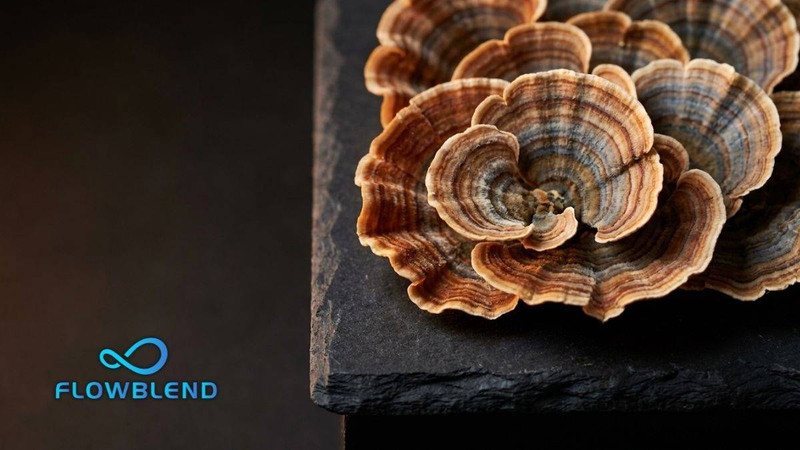
Turkey tail (Trametes versicolor) is the fan-shaped, banded mushroom you have stepped past on every dead log in every forest you have ever hiked. It is one of the most common fungi on earth, and its claim to fame is a class of compounds called protein-bound polysaccharides — beta-glucans, mainly — that interact with the immune system in ways researchers have spent fifty years mapping.
That is not marketing language. Turkey tail genuinely is the mushroom with the deepest clinical paper trail. Which is exactly why it makes the most interesting case study in this series: even the best-credentialed mushroom in the world cannot survive the pouch math.
The Research Story — Told Straight
Here is what the actual record says.
In 1977, Japan approved a turkey tail extract called PSK (brand name Krestin) as a prescription drug, used alongside conventional treatment in oncology settings. It has been covered by Japanese national health insurance for decades. Clinical protocols typically dosed it at about 3 grams of concentrated extract per day, taken for months or years under medical supervision.
Read that sentence again, because every clause is doing compliance work that pouch marketing skips:
- A pharmaceutical-grade concentrated extract — not dried mushroom powder.
- 3 grams a day — measured, consistent, long-term.
- Alongside conventional treatment, under doctors — an adjunct, never a standalone anything.
- Approved in Japan — PSK is not approved for treating any condition in the United States.
None of that says "a turkey tail pouch supports your immune system." It says: under specific medical conditions, at 30 times the dose a pouch holds, a drug-grade extract of this mushroom earned a place in one country's medical system. Impressive history. Zero transfer to a 100 mg pouch.
What That Means for a Pouch
The clinical extract dose: 3,000 mg per day.
A typical mushroom pouch: about 100 mg of extract. Step through it:
- 3,000 ÷ 100 = 30 pouches per day to match the clinical protocol.
- A full 15-pouch can: 15 × 100 = 1,500 mg. Two entire cans a day (3,000 ÷ 1,500 = 2) — every day, indefinitely — just to reach the studied intake.
- And that still would not replicate the research, because PSK is a standardized pharmaceutical extract, not the generic "fruiting body powder" most pouches use.
The beta-glucans in a turkey tail pouch are real. The quantity is decorative.
So Is It a Ritual or a Scam?
Neither, exactly. It is a ritual wearing a lab coat.
A turkey tail pouch will not hurt you. It tastes woodsy, it gives your mouth a job, and if it replaces a nicotine tin, it has done something genuinely useful. As a daily token of "I'm taking care of myself," it is harmless and maybe even pleasant.
The problem is the implied promise. "Immune support" printed over 100 mg of undisclosed powder borrows credibility from hospital research the product cannot cash. Most pouch brands in this category never print their extract weight at all — and as we keep saying across this cluster, a brand that hides the number has told you the number.
Honesty matters more to us than a sale here, so here it is plainly: FlowBlend does not make an immune product, and we are not going to dress one of our pouches up as the answer to this article. Mushrooms are a ritual. Cannabinoids and nootropics are tools — for focus, energy, and calm. Immunity is not a pouch problem. It is a sleep, food, and training problem.
The Fruiting Body Problem
One more layer of honesty the category skips, because turkey tail suffers from it worst of all.
The Japanese research extracts — PSK and its cousin PSP — are made from specific cultivated strains through standardized extraction. Much of what is sold as "turkey tail" in American supplements is something else: mycelium grown on sterilized grain, then ground up together with that grain. The polysaccharide content of myceliated grain products varies wildly, and a meaningful share of the powder in the capsule — or the pouch — is the rice or oats the fungus grew on.
So a typical turkey tail pouch is not just 30 times short of the clinical dose. It may also be carrying a diluted form of the mushroom, with no standardization connecting it to the extracts that earned the research citations on the brand's website.
Two label checks if you buy turkey tail in any format:
- "Fruiting body" stated outright — and ideally a beta-glucan percentage from actual testing. "Mycelial biomass" means grain is in the bottle.
- A milligram number per serving. No number, no purchase. That rule will serve you across every supplement aisle, not just this one.
What Actually Moves the Needle
Since we will not sell you an immune pouch, here is what the boring evidence has always said matters: sleeping seven-plus hours, training consistently, eating actual food, managing the stress load, and not smoking. None of it fits in a pouch, none of it is for sale, and all of it outperforms anything in this article.
Where a pouch honestly fits into that picture: protecting the routine. A CLUTCH pouch at night instead of a nicotine tin. A STOKED pouch instead of the fourth coffee that wrecks your sleep. Tools that defend the fundamentals — not shortcuts around them.
New breakdowns land in the newsletter first — signup is at the bottom of this page.
What We Build Instead
If you landed here researching pouches in general, here is where measured doses actually live in our lineup:
- Focus: SPEAR nootropic pouches — 150 mg Alpha-GPC per pouch, disclosed since 2021, the first nootropic pouch in America.
- Clean energy: STOKED — PurCaf organic caffeine with CoQ10 and B12.
- Calm: CLUTCH — 10 mg CBD per pouch, 20 to a can, third-party tested.
- Everything: flowblend.com/shop.
Every can prints every milligram. That is the standard this whole article just held turkey tail to, and we are happy to be held to it ourselves.
FAQ
Do turkey tail pouches support your immune system?
The research behind turkey tail used concentrated pharmaceutical extracts at about 3 grams per day in medical settings. A typical pouch holds around 100 mg. No study supports immune effects at pouch doses, and PSK is not approved for any use in the United States.
What are turkey tail beta-glucans?
Beta-glucans are protein-bound polysaccharides found in turkey tail's cell walls. They are the compounds studied in PSK and PSP research. They are real chemistry — present in pouches only in token amounts.
What is PSK (Krestin)?
PSK is a standardized turkey tail extract approved in Japan since 1977 as a prescription adjunct used alongside conventional treatment, typically dosed around 3 grams daily under medical supervision. It is not the same thing as turkey tail powder in a supplement or pouch.
How many turkey tail pouches would match the clinical dose?
At 100 mg of extract per pouch: 3,000 ÷ 100 = 30 pouches per day. That is two full 15-pouch cans daily, indefinitely — and still with a different, weaker form of the mushroom.
Is there any reason to use a turkey tail pouch?
As a ritual, sure — it is a harmless habit and a decent replacement for worse ones. Just do not pay a premium for immune promises the dose cannot keep.
Is the turkey tail in supplements the same as PSK?
Usually not. PSK is a standardized pharmaceutical extract from specific cultivated strains, produced for the Japanese medical system. Most US supplements and pouches use generic turkey tail powder or mycelium grown on grain — different form, different concentration, no standardization, and no direct connection to the published research.
Related Reading
- Mushroom Pouches: The Complete 2026 Guide — the pillar guide to the whole category
- Lion's Mane Pouches: Do They Actually Work? — the dose math applied to the focus mushroom
- Chaga Pouches: Antioxidant Claims vs. Real Performance Tools
Nate is the founder of FlowBlend.