
Mushroom Pouches
Reishi Pouches for Calm and Sleep: What They Actually Do
Nate, founder of FlowBlend
The Short Version
Reishi is the most famous calm-down mushroom on earth, and the human research on it used 5,400 mg of extract per day for eight weeks. A typical reishi pouch holds about 100 mg. That is a 54-pouch-a-day gap. The sleep research is almost entirely in rodents. If you want an evening ritual, reishi is a pleasant one. If you want to actually come home after a long day, a disclosed dose of CBD and CBN — like CLUTCH 75 Unwind — is a tool built for the job.
Why Reishi Is in Everything
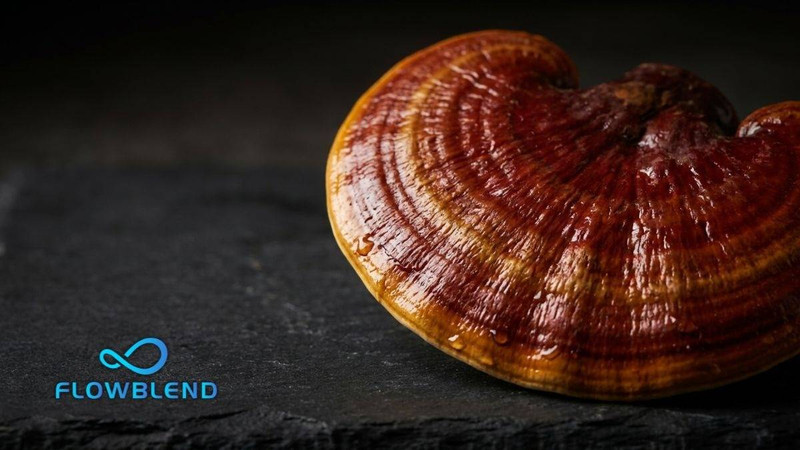
Reishi — Ganoderma lucidum, the glossy red shelf mushroom — has roughly two thousand years of use in Chinese medicine, where it was called the "mushroom of immortality." Emperors drank it. Monks brewed it. Modern wellness brands put it in coffee, gummies, chocolate, and now pouches.
The pitch is always the same: calm, stress relief, better sleep. And unlike a lot of wellness ingredients, reishi did not come from nowhere. There is real chemistry here — triterpenes and polysaccharides that researchers have studied for decades.
The question is never whether reishi contains interesting compounds. It does. The question is whether the amount in a pouch does anything for the person using it. That question has a number attached, and the number is not friendly to pouches.
What the Human Research Actually Shows
The most cited human trial for reishi and the tired, run-down feeling it supposedly fixes is Tang et al., 2005, in the Journal of Medicinal Food. It was a randomized, double-blind, placebo-controlled study — the good kind — in 132 people with neurasthenia, an older clinical term for persistent fatigue and poor sleep quality.
The protocol: 1,800 mg of a reishi polysaccharide extract, three times a day, for eight weeks.
Run that multiplication: 1,800 × 3 = 5,400 mg of concentrated extract, every day, for two months.
The result: the reishi group reported meaningfully less fatigue than placebo. A real finding, in a real journal, at a dose you could measure with a kitchen scale.
That is the honest case for reishi. Notice what it required — grams per day, taken consistently for weeks. Notice also what it measured: self-reported fatigue and wellbeing. Useful, but soft endpoints, in one study, two decades old. The research base is thinner than the marketing suggests.
The Sleep Claim Has a Rodent Problem
"Reishi for sleep" is the phrase that sells, so here is its honest status.
The sleep-specific evidence for reishi comes almost entirely from rodent studies — extracts shortened how long it took rats to fall asleep and lengthened their sleep time. Interesting biology. But rats are not men juggling a job, a gym schedule, and two kids, and rodent doses scale to gram-level human equivalents anyway.
Solid human sleep trials for reishi at any dose — let alone pouch doses — are essentially absent. Any pouch brand telling you their reishi blend will fix your nights is selling past the evidence. We cover this pattern across the whole category in our complete guide to mushroom pouches: real mushroom, real lab science, missing human dose.
The High-Dose Tier
The Dose Math Nobody Prints
The human fatigue study dose: 5,400 mg of reishi extract per day.
A typical mushroom pouch: roughly 100 mg of extract, often undisclosed. Step through it:
- 5,400 ÷ 100 = 54 pouches per day to match the study.
- Even at a generous 300 mg per pouch: 5,400 ÷ 300 = 18 pouches per day.
- A 15-pouch can at 100 mg each: 15 × 100 = 1,500 mg. You would finish three and a half cans daily (5,400 ÷ 1,500 = 3.6) just to reach the studied dose.
Extract strength matters — a concentrated dual extract beats raw powder milligram for milligram, and the Tang study itself used a concentrated polysaccharide extract. Which makes the comparison worse for pouches, not better: 5,400 mg of the strong stuff versus 100 mg of who-knows-what.
This is the same arithmetic that sank lion's mane pouches and cordyceps pouches. The category has a math problem, and reishi has the biggest one we have run yet.
The Honest Case for a Reishi Ritual
None of this makes a reishi pouch worthless. It makes it a ritual — and evening rituals are genuinely useful.
A reishi pouch after dinner gives the wind-down a starting gun. It tastes dark and earthy. It occupies the mouth and the hands, which matters a lot if your old evening habit was a dip tin or a vape. The signal it sends — "the workday is over" — is real, even when the milligrams are not doing the heavy lifting.
If that is what you want, buy it with clear eyes: you are buying a ceremony, and ceremonies have value. Pick a brand that prints its extract weight on the can, because a brand that hides the number has already told you what the number is.
But do not confuse the ceremony with the substance. Mushrooms are a ritual. When the evening actually needs settling — when the edge from a brutal day follows you through the front door — you want a tool with a disclosed dose that works at pouch scale.
If You Still Want Reishi, Buy It Honestly
For the readers who want the mushroom anyway, here is how to avoid the worst of the category:
Buy the form the research used. The Tang study used a concentrated polysaccharide extract, not raw powder. Look for "dual extract" (water plus alcohol — the triterpenes need the alcohol step) with a stated beta-glucan percentage. "Reishi powder" with no extraction listed is sawdust-adjacent.
Demand a milligram number. A brand that prints "reishi extract, 500 mg per serving" is at least letting you do the math. A "calming mushroom blend" with no breakdown is hiding it for a reason. As a rule across this whole category: the more serene the branding, the vaguer the label.
Skip the pouch format for reishi specifically. Even honest reishi brands cannot fit a meaningful dose in a pouch. If you want gram-level reishi, it comes as tea, tincture, or capsules taken several times a day. The pouch version is the ritual with the smallest possible payload — which is fine, as long as you know that is what you bought.
When You Want a Tool Instead
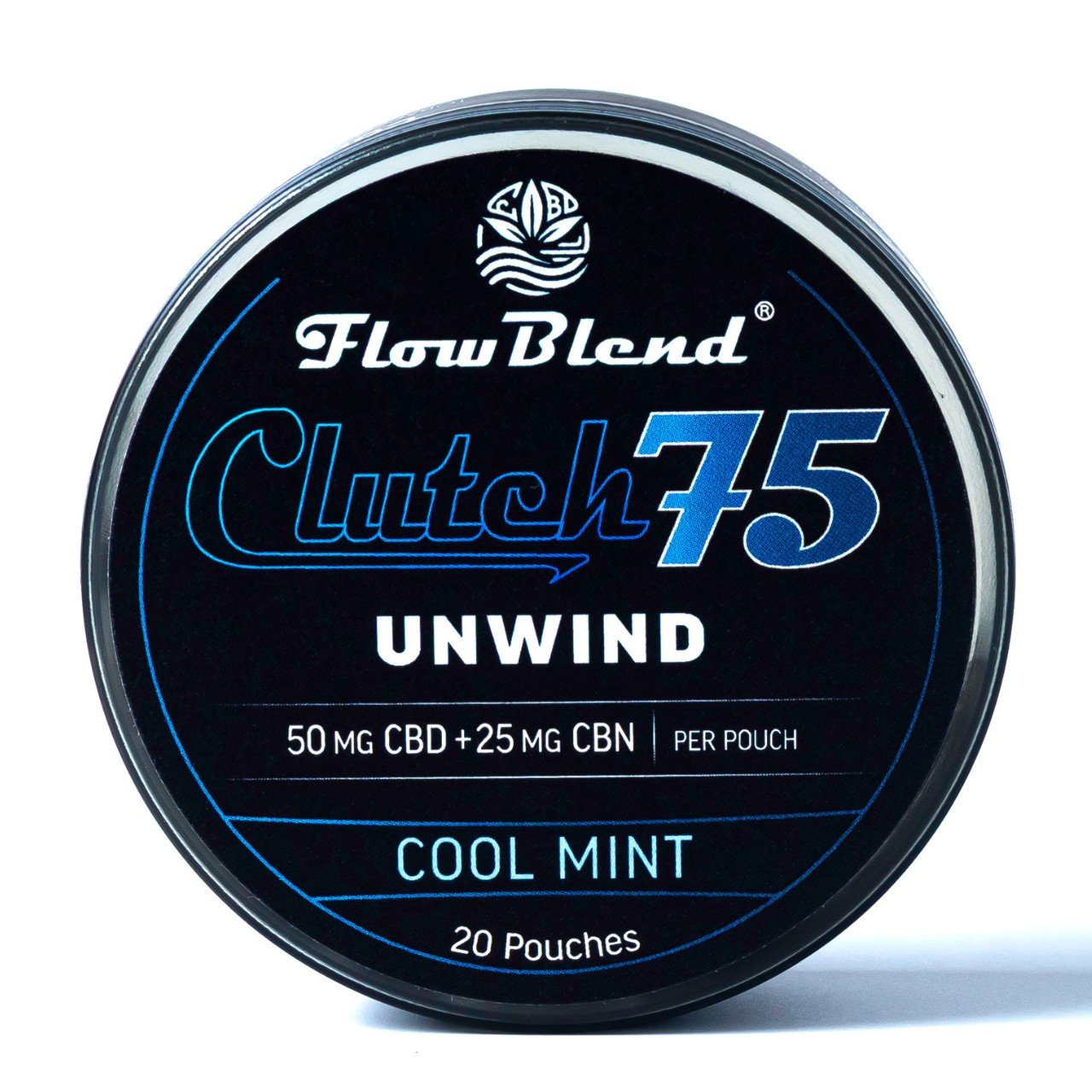
CLUTCH 75 Unwind is FlowBlend's evening pouch: 50 mg of CBD plus 25 mg of CBN per pouch, cool mint, third-party tested, every milligram printed on the label. Cannabinoids work in tens of milligrams — which is exactly what a pouch can deliver. No 54-pouch arithmetic required.
We do not make sleep claims, because that is medicine and this is a pouch. What we can tell you is what customers say in their own words:
"I use this in the evening to unwind. It's easier to 'come home' after work and I get to spend more time with my wife and kids." — Luke Gerrick, verified review
For a lighter touch, standard CLUTCH calm pouches carry 10 mg of CBD across eight flavors — the everyday wind-down, 20 to a can.
"The flavor has lasted 6 hours easily and was still going strong. The calming effects work well, not too much but still enough." — Zakary Ellingson, verified review
The difference is not that cannabinoids are magic and mushrooms are fake. The difference is dose honesty: one of these fits its working dose inside a pouch, and one needs a soup pot.
The High-Dose Tier
How to Run Your Evening
A simple decision guide:
- You want the tea-ceremony version of winding down. A reishi pouch or reishi tea is a fine ritual. Enjoy it for what it is.
- You want the edge gone, reliably, at a dose you can read on the can. CLUTCH 75 Unwind is built for exactly that hour of the day.
- You are comparing options across the category. Start with the complete mushroom pouch guide, or browse the full lineup at flowblend.com/shop.
FAQ
Do reishi pouches help with sleep?
The sleep evidence for reishi is almost entirely from rodent studies. Human sleep trials at pouch doses do not exist. A reishi pouch can be a pleasant evening ritual, but the research does not support sleep claims at 100 mg.
What dose of reishi did human research use?
The most cited human trial (Tang et al., 2005, Journal of Medicinal Food) used 5,400 mg of concentrated reishi extract daily — 1,800 mg three times a day — for eight weeks. A typical pouch holds about 100 mg.
How many reishi pouches would equal the research dose?
At 100 mg of extract per pouch: 5,400 ÷ 100 = 54 pouches a day. At 300 mg per pouch, it is still 18 a day. The studied dose does not fit in a pouch format.
What is reishi supposed to do?
In research settings at gram-level doses, reishi extract was associated with less self-reported fatigue over eight weeks. Traditional use centers on calm and general wellbeing. Effects at pouch-level doses have not been studied.
What works at pouch doses for evening calm?
Cannabinoids — they are active in tens of milligrams. CLUTCH 75 Unwind carries 50 mg CBD and 25 mg CBN per pouch, third-party tested, with the full dose printed on the label.
Is reishi safe?
Reishi is generally well tolerated in studies, though gram-level doses can cause digestive upset in some people, and it may interact with blood thinners. Pouch-level amounts are far below studied doses. Ask your doctor if you take medications.
Related Reading
- Mushroom Pouches: The Complete 2026 Guide — the pillar guide to the whole category
- Lion's Mane Pouches: Do They Actually Work? — the dose math applied to the focus mushroom
- Cordyceps Pouches: Clean Energy or Placebo Ritual?
Nate is the founder of FlowBlend.