
Why Do Nicotine Pouches Cause Gum Irritation? Is There a Better Alternative?
Best Alternative: No-Nic Flowblend Pouches
Key Takeaways
- Nicotine pouches irritate gums due to direct contact, high nicotine concentration, and chemical flavorings that can burn or inflame sensitive oral tissue. Over time, this repeated irritation can cause gum recession and localized damage.
- Personal habits significantly factor into risk, particularly long sessions, incessant pouch use, or positioning pouches in the same location. Stacking pouches with smokes or vaping compounds the stress on gum health even more.
- Early warning signs are redness, swelling, tenderness, white patches, and mild burning in the area where the pouch sits. If you have persistent pain, bleeding, ulcers, or visible gum loss, it is time to cease use in that area and consult your dentist or doctor.
- The ‘chemical cocktail’ in pouches extends beyond nicotine and commonly contains artificial flavorings, sweeteners, and preservatives that can be cytotoxic to gum cells. Reading ingredients and preferring simpler, lower-strength products can minimize risk but not eliminate it.
- To reduce irritation, minimize overall daily use, rotate location, and maintain good oral hygiene with twice daily brushing, flossing, and alcohol-free antimicrobial mouthwash. Tracking symptoms in an easy table can help you spot patterns and adjust before damage gets serious.
- For the performance and health-conscious, alternatives like patches, controlled NRT, or an actual quit plan can minimize oral tissue injury and still treat nicotine addiction.
What causes nicotine pouch gum irritation is mostly a combination of local chemistry, contact time, and personal sensitivity.
Nicotine itself can both dry tissue and alter blood flow. Added flavors, sweeteners, and pH-adjusting agents can further stress the gum surface, particularly when used multiple times in the same location.
Fit, saliva flow, and existing gum health also play a factor. The sections that follow deconstruct these factors in an accessible, actionable manner.
Why Nicotine Pouches Irritate Gums
Nicotine pouches appear neat and minimalist. Their position staying in place on your gum leaves many users prone to irritation. Direct contact is the primary concern. The pouch sits against the same patch of gum for 10 to 45 minutes, sometimes longer.
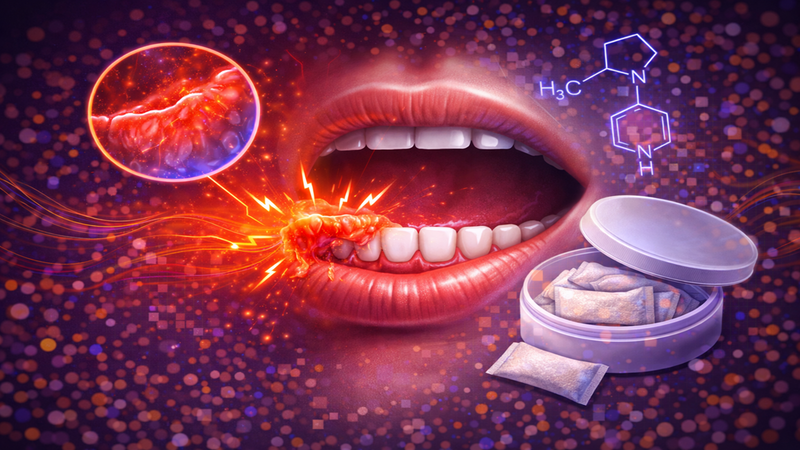
That local pressure along with moisture creates a mini chemical “hot zone.” The result is the classic nicotine pouch burn: a stinging, raw area exactly where the pouch sits. Case reports comprise a 23-year-old student developing clear lesions in that contact zone and long-term users describing their mouth was shredded to bits or even that they peeled half their gum off. That’s not flowery writing; that’s tissue destruction.
Nicotine concentration makes that burn more intense. Most pouches hover at about 1.29 to 6.11 mg, while a few “strong” options score up to 11 mg per pouch. That dose strikes a tiny patch of thin oral mucosa all at once. The instant sting or burn is the surface layer protesting.
Underneath that, nicotine causes vasoconstriction, as it tightens blood vessels and decreases blood flow to the gums. Less blood leads to less oxygen, slower repair, and even more inflammation down the road, especially if you put pouches in the same location day after day.
Chemical additives add another layer of stress. Sweeteners and flavor systems keep people using them longer and more often, which drives repeated exposure. Several components can irritate or dry out tissue and disrupt the normal barrier:
- Strong mint and menthol flavoring agents
- Citrus and other acidic flavors
- Artificial sweeteners and harsh carriers
- pH modifiers that make nicotine absorb faster
- Preservatives and stabilizers in the pouch material
Dentists are now seeing more patients with painful inflammation and ulcers that can take months or even years to fully calm down, often in the exact areas where pouches are placed. A study at the University of Gothenburg is already underway on “white snus” due to this gum damage pattern. High nicotine increases addiction risk, which means more frequent use and even more irritation.
How Your Habits Worsen Irritation
Habit cycles determine if nicotine pouch use remains an irritant or a long-term mouth issue. Such frequent or prolonged sessions maintain your gum tissue in constant assault. Nicotine itself irritates and constricts blood flow, so when a nicotine pouch sits in one place for 40 to 60 minutes instead of 20 to 30, that spot experiences repeated chemical and mechanical strain.
Put that on repeat every day, and the tissue has no real recovery window. By using the exact same placement—right upper lip, same pocket, every time, you generate a “hot zone” where irritation, swelling, or white patches show up first. Rotating placement is no panacea, but it at least distributes the load so one spot is not perpetually injured.
Bad tooth care converts mild irritation into fiery inflamed tissue. If brushing is haphazard, flossing is infrequent and plaque piles up at the gumline, you’re providing bacteria with more food. Toss a pouch on top of that, and the irritated site bathes in a cocktail of nicotine content, flavoring agents and bacterial toxins.
That mix increases the risk of post dental procedure redness, tenderness and slow healing. Good enough” hygiene typically won’t cut it in this area. The more frequently you use pouches, the more dialed-in your cleaning regimen has to be.
Stacking products makes the danger curve sharper. Using pouches while still smoking or vaping means your gums get hit from multiple angles: heat and smoke, vapor chemicals, and direct pouch contact. Long-term daily use in that context increases the risk of gum recession, chronic sores, or even tissue changes that you may miss if you’re not regularly watching for white patches, ulcers, or persistent tenderness.
Identifying Gum Damage Signs
Gum irritation from nicotine pouches generally develops silently, not spectacularly. Detecting these miniature shifts early is what safeguards long-term oral health and, by extension, overall output.
One of the initial signs is local irritation where the pouch rests. Nicotine pouches can irritate that contact point, so the gum appears redder than the surrounding tissue and is more sensitive to pressure, brushing, or hot beverages.
- Redness where the pouch rests
- Swelling or puffiness in a specific spot
- Tenderness when touching or brushing
- White patches or film on the gum surface
Swollen or bleeding gums are particularly critical warning signs. Bleeding when brushing or flossing is not “normal.” It almost always means inflammation.
Some users note ‘shredded’ or peeled gum tissue following heavy or frequent pouch use, which is an obvious indicator the tissue is being pushed beyond its ability to heal.
More serious damage manifests as constant pain or mouth ulcers or lesions that develop and do not heal between applications. Sometimes these lesions can be deep enough that the root of the tooth is exposed.
That kind of breakdown is not cosmetic. Over time, this type of chronic irritation and bone loss surrounding teeth is associated with tooth loss, one of the most severe consequences of continued nicotine exposure to the gums.
Dry mouth is yet another nicotine consequence. Less saliva leads to slower healing, a greater cavity risk, and more friction on already-fragile gum tissue.
A simple tracking table can keep this objective:
Date | Pouch side/region | Symptom(s) | Intensity (1–10) | Comments (how often, how long) |
If symptoms keep showing up in the same spot, reduce pouch frequency, move placement, and tighten oral hygiene. Brush at least twice daily with fluoride toothpaste, floss once per day, and monitor if the tissue calms down over one to two weeks.
The Unspoken Chemical Cocktail
Nicotine pouches appear straightforward on the surface. Compact, neat, “smoke free.” Inside, the story is different. You’re banging a concentrated cocktail of chemicals right up against the same gum tissue, often for 20 to 60 minutes, several times per day.
It’s that constant, concentrated contact that causes most inflammation and permanent injury. At baseline, you’ve got nicotine. In higher doses, it is cytotoxic to gum cells. It dries tissue, constricts blood vessels, and impedes normal repair.
Over time, that helps explain why localized gum recession is so prevalent precisely where the pouch rests. Use more than ten pouches per day, and the exposure curve gets steep quickly.
Then you have the rest of the blend: pH modifiers, sweeteners, flavors, stabilizers, and preservatives. Most pouches hover at a pH of around 7 to 8. That higher pH environment accelerates nicotine absorption but can irritate or burn certain users.
The ‘slight tingle’ that they advertise is, in reality, light chemical burn. For others, it’s like a scald.
Component | Role | Potential oral effect |
Nicotine | Active drug | Cell stress, delayed healing, gum recession |
pH modifiers (e.g. carbonates) | Boost absorption | Burning, surface irritation |
Artificial flavors | Taste and “cooling” effect | Local sensitivity, inflammation in some users |
Sweeteners (polyols) | Taste | Plaque changes, altered oral microbiome |
Preservatives | Shelf life | Added chemical load on already stressed tissue |
It’s the stack, not the ingredient, that’s the real problem. You get chemical exposure, along with mechanical pressure in one area, along with constricted blood flow.
Nicotine, meanwhile, suppresses bleeding and obvious inflammation, so harm can accumulate in stealth mode while gums continue to appear ‘healthy.’ Genetics, diet, saliva and gum shape all alter how hard this cocktail hits, but the stress itself is invariant.
How to Minimize Gum Irritation
Goal is simple: use pouches without beating up your gums. That implies controlling exposure, not hunting for bigger bangs.
Rotate placement. Move the pouch around between locations in the upper lip: front, left, right. Don’t just park it in the same groove all day. That’s where you get hot spots, raw tissue, and painful slow healing.
If any area is tender or red, stay away from that area completely for a few days. Treat your gums like joints under load: rotate, deload, recover.
Dose and flavor control. Lower strengths are gentler on tissue, particularly if you’re a newbie or already irritated. High-nicotine, “extra strong” formats tend to irritate the gums even more by stinging and drying out the mucosa faster.
The same applies to flavor: mint, icy, or strong citrus often hit harder; milder flavors tend to sting less. If a pouch feels like it’s burning aggressively during the first few minutes, that’s information.
Step down in strength or choose a softer flavor. As soon as the flavor and nicotine feel relatively depleted, take the pouch out instead of exhausting the round. Less time on tissue typically equals less trauma.
Tighten your oral hygiene system:
- Brush twice daily with a soft-bristle brush for approximately 2 minutes, emphasizing the gumline where your pouches sit.
- Floss once a day to remove plaque between teeth, so tender gums are not battling nicotine and bacteria.
- Rinse with an alcohol-free antimicrobial mouthwash to reduce bacteria without cracking your mouth further.
- Keep hydrated. Regular water consumption stimulates saliva and soothes dry-mouth irritation.
- If you have gum disease, recession, or frequent soreness, bring a dentist into the mix before using extra products.
Pay attention to your body. If burning is severe or persists after removal, reduce frequency, reduce duration, reduce strength, or discontinue. Sustained output is more important than brief stimulation.
The Best Alternative To Nicotine Pouches
Flowblend's pouch products are perfect if you're looking for a nicotine pouch alternative. Here's a quick breakdown of when you should use what.
The idea is you're keeping the familiar oral habit while giving your brain something useful instead of nicotine. All three are zero-nicotine, zero-tobacco.

Other Alternatives
Nicotine pouches might seem cleaner than smoking or vaping. They still slap your gums. Looking at alternatives is less about pursuing “safe” and more about damage reduction as you strive to become nicotine-free.
Nicotine replacement therapy like gum, lozenges, and patches tend to irritate less than oral pouches. Gum and lozenges disperse contact throughout the mouth rather than pounding one spot over and over. Patches skip the mouth altogether.
That’s important because pouches stay in one place, pushing both concentrated nicotine and pH alterations into that tissue. Over time, you get receding gums, local lesions, and sensitivity that doesn’t correlate with your age or oral hygiene. A few case reports demonstrate lesions so deep they lay bare the tooth root.
Patches still have nicotine, but gums are usually the lowest-friction option. Compared with conventional smokeless tobacco (such as chewing tobacco or snus), nicotine pouches eliminate many carcinogens, which is an upgrade.
You still get:
- Local irritation in the exact placement area
- Suppressed bleeding and visible inflammation, which can hide problems
- Receding gums from repeated chemical and mechanical stress
- Mouth ulcers that make eating and talking painful
- Early sensitivity is typically the initial indicator that tissue support is shifting.
Smoking disseminates heat and smoke throughout the entire mouth. Pouches cause a cumulative, very intense hit in one location. That concentrated impact is the reason the same side, same tooth region tends to wear down first.
Conclusion
Nicotine pouch gum irritation isn’t arbitrary. It stems from a combination of mechanical friction, dehydrating ingredients, pH shifts, and your own habits. High frequency, long holds in the same spot, and stronger products all put more load on your tissue.
The good news is that the majority of the risk is modifiable. All of these reduce damage by rotating placement, lowering strength, shortening sessions, and selecting cleaner formulations. Listening to early warning signs, such as persistent redness, tenderness, or recession in the pouch area, counts more than any marketing claim.
For most, the true answer in the long term is stepping down to lower-nicotine or non-nicotine products. The goal is simple: keep your focus and performance without trading away your gum health.
Frequently Asked Questions
Can nicotine pouches permanently damage my gums?
Indeed, regular use of nicotine products can lead to chronic gum recession and sensitivity. Nicotine constricts blood flow and persistent friction inflames oral tissues. Over time, this can expose tooth roots, increasing susceptibility to tooth decay and tooth loss, making regular dental check-ups essential.
Why do my gums hurt only where I place the pouch?
Nicotine pouch use can lead to persistent pressure and friction, causing local irritation, redness, or white patches. To minimize potential oral health issues, rotating the location and limiting nicotine pouch usage is advisable.
Are “tobacco-free” nicotine pouches safer for my gums?
‘Tobacco-free’ means no leaf tobacco, yet products like nicotine pouches still contain nicotine, flavorings, and other additives that can irritate gum tissue. While they might minimize certain dangers, prolonged nicotine pouch use can still lead to gum irritation and recession.
How can I tell if gum irritation is becoming serious?
Warning signs of potential oral health issues include persistent soreness, bleeding, white or red patches, receding gumlines, or loose teeth. If pain persists for a few days after nicotine pouch use, visit a dentist. Early treatment helps avoid more serious and expensive dental problems.
What can I do right away to reduce gum irritation from pouches?
Take the nicotine pouch out and let your gums have a rest to avoid potential oral health issues. Rinse with warm salt water to soothe irritation. Don’t lay pouches on sore spots, and keep hydrated to support saliva production.
Do smaller or lower-strength pouches reduce gum irritation?
Well, they sometimes do. Lower nicotine content and smaller size generally means less chemical exposure and pressure on your gums. However, irritation can still occur, so be mindful of your symptoms and modify the frequency and duration of your nicotine pouch use.
Are there safer alternatives to nicotine pouches for quitting smoking?
Yes. Again, use any Flowblend Pouch. The other options range from nicotine gums, prescription medicines, and behavioral support. These techniques circumvent direct contact with gum tissue, which is crucial for maintaining oral health. A health professional or quitline can help you select a plan that suits your health, budget, and objectives.
Additional Topics: