
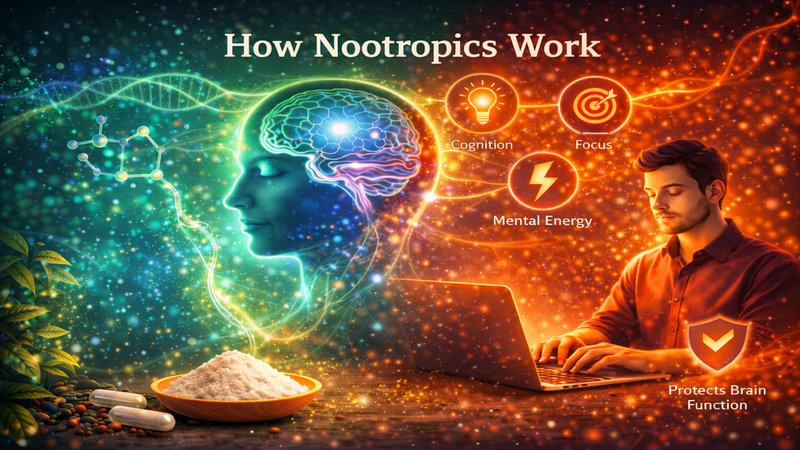
How do nootropics work and what are their effects?
Key Takeaways On How Nootropics Work
- Nootropics work by affecting neurotransmitters, enhancing cerebral blood flow, augmenting brain energy, and offering neuroprotection. Each of these factors facilitates optimal cognitive performance and sustained brain health.
- Boosting brain energy metabolism and oxygen delivery can make concentration crisp and your mind persistent when tackling a hard task.
- You should factor in your biology when choosing nootropic supplements because everyone responds differently, depending on their genetics, age, and health conditions.
- Stacking nootropics can create synergistic effects. Begin with minimal dosages, track responses, and customize for individual preferences to optimize advantages and mitigate dangers.
- Civilized usage is key. Mind the side effects, drug interactions, and taking regular breaks to prevent tolerance or dependency.
- Lifestyle factors such as nutrition, exercise, sleep, and stress management are crucial in optimizing the cognitive enhancement effects of nootropics and promoting brain health.
Nootropics work by aligning with and supporting the brain’s natural systems for focus, memory, and resilience under stress. These substances typically act on neurotransmitters, circulation, or neuronal energy in the brain, seeking to enhance cognitive function without excessive activation.
Most nootropics work in the background, creating capacity over time instead of providing an obvious ‘kick’. By considering them in the framework of cognitive infrastructure, we gain context for their benefits and have a more reasonable starting point for expectations in rigorous training and recovery systems.
How Do Nootropics Work?
Nootropics influence the brain via various interconnected mechanisms. At their heart, their activities focus on regulating neurotransmitters, enhancing blood flow to the brain, optimizing brain energy metabolism, and protecting the brain.
Here’s a summary:
Mechanism | Example Ingredient | Core Effect |
Neurotransmitter Modulation | Piracetam, Modafinil | Boosts acetylcholine, dopamine, serotonin |
Cerebral Circulation | Vinpocetine, Ginkgo biloba | Increases blood, oxygen, and nutrient delivery |
Brain Energy Metabolism | Acetyl-L-carnitine (ALCAR) | Elevates ATP production, supports neuronal health |
Neuroprotection | Bacopa monnieri, Ginkgo | Reduces oxidative damage, supports regeneration |
1. Neurotransmitter Modulation
Nootropics such as piracetam boost acetylcholine release, which is critical for memory and learning. Modafinil blocks dopamine and norepinephrine reuptake, increasing alertness and motivation without the stimulant crash.
Cholinergic nootropics, including alpha-GPC, refine cognitive lucidity by providing the raw materials for acetylcholine production. With balanced neurotransmitter activity, you’ll have less mood swings, more stable motivation, and improved general cognition.
The right blend can help you maintain a clear, focused mind under pressure, not wired or drained.
2. Cerebral Circulation
Enhanced blood flow, provided by components such as vinpocetine and ginkgo biloba, implies that cells receive increased oxygen and nutrients. Ginkgo’s antioxidant properties protect blood vessels from oxidative stress, minimizing the risk of microvascular damage.
With improved circulation, the brain remains crisper during long workdays or training blocks.
3. Brain Energy
ALCAR and phosphatidylcholine increase ATP generation and support robust brain cell membranes. Caffeine provides a short-term energy boost, but not all nootropics arouse.
Glucose metabolism continues to be a key factor in prolonged mental exertion. Absent it, cognitive output declines quickly.
4. Neuroprotection
Bacopa monnieri increases neurotrophic factor expression, which helps the survival of neurons. Panax ginseng and ginkgo biloba protect from oxidative damage and neurotoxins, buffering against cognitive decline.
Others, such as lion’s mane, might even encourage brain regeneration.
5. Brainwave Activity
Some nootropics alter brainwave activity, for example, increasing alpha or beta waves associated with focus or calm. L-theanine, for instance, induces calm alertness.
Combined with training or meditation, nootropics can help you lock in desired mental states.
Common Nootropic Types
There are a few common types of nootropic supplements. They span from synthetic substances to herbal extracts, and their efficacy and safety differ greatly. Understanding these categories allows you to cut through the hype and focus on what best fits your long-term brain wellness.
Racetams
Racetams are the synthetic class, most notable for adjusting neurotransmitter systems related to learning and memory. Piracetam, the original racetam, has been studied for decades and is still remarkable for its low toxicity. Aniracetam and oxiracetam, newer types, are marketed as quicker acting and stronger in impacting focus and alertness.
Typical side effects are minor, including headaches and gastrointestinal upset, but research into chronic use is still sparse. These drugs are not licensed for cognitive use in most countries, so users should consider the legal and safety issues carefully.
Adaptogens
Adaptogens are herbs that aid the body in adapting to stressors and resist fatigue. Rhodiola rosea, at a dosage of 50 milligrams standardized to 3% rosavins and 1% salidrosides, boosts mental resilience and maintains performance under stress.
Herbs such as ashwagandha and Bacopa monnieri, at a dosage of 200 to 400 milligrams standardized to 20% bacosides, offer neuroprotection and can help memory over long stretches. Adaptogens are frequently stacked with other nootropics for synergistic benefits. The outcomes depend on individual response and regular use.
Cholinergics
Cholinergic nootropics increase the presence of acetylcholine, a neurotransmitter important for memory. Citicoline (250mg) and lecithin (1200mg, 3 times daily) are common sources that support cognitive processing and attention.
Stacking cholinergics with racetams or adaptogens is common and can enhance results for some. Overuse can cause headaches or muscle tension, which are symptoms of too much cholinergic activation.
Natural Extracts
Herbal extracts such as ginkgo biloba, lion’s mane mushroom (500 mg) and guarana (75 mg, approximately 12% caffeine) are popular for their antioxidant and neuroprotective properties. Today’s nootropics owe a lot to traditional medicines, using ingredients such as vinpocetine to promote cerebral blood flow.
Every extract introduces a distinct set of bioactive compounds that assist memory, mood, or concentration based on formulation and dose.
Beyond the Pill
Long-term brain performance is dictated by more than a supplement regimen. Nootropics are just one lever. You experience some real gains when you witness the full system—biology, habits, timing, and recovery—working in harmony.
The ‘beyond the pill’ mindset appreciates long-term gains, not band-aid solutions or buzz.
Your Biology
Genetics influence nootropics’ effects for each individual. Others metabolize ingredients such as caffeine or ashwagandha differently. What hones concentration in one gives you the shakes in another.
Age and fluctuating hormones come into play. Cognitive requirements evolve and so does reaction to supplements. Health issues can make the difference. If you have thyroid disease or blood pressure issues, some nootropics may be inappropriate or necessitate medical supervision.
Individual biology requires an individualized approach. What works for your training partner may not suit your system. Tailored plans based on self-reflection and, when feasible, professional input minimize risk and generate improved outcomes.
Your Lifestyle
Dietary modifications result in Omega-3s, vitamin D, and lecithin (1200 mg three times a day) plus nootropics for brain health. Regular exercise energizes the brain and enhances the impact of your supplements.
Stress management, including breathwork, meditation, or just a walk, keeps the brain responsive, not reactive. Social activity and brain teasers, such as reading, education, and puzzles, keep your mind strong and healthy.
With the right habits, nootropics become less of a crutch and more of a tool, supporting not supplanting real work.
Your Timing
Timing is important. Taking nootropics to match your natural rhythm, early for focus and late for recovery, can make a difference. Circadian biology controls when your brain is primed to be alert or to sleep.
Some nootropics take in better with food, others on an empty stomach. Sensible use during spikes of demand, such as work deadlines and competition prep, provides the greatest return.
When used purposefully and not as habitual white noise, the gains are more steady and dependable.
The Stacking Synergy
Stacking nootropics isn’t about finding a shortcut. It’s about constructing a system. Rather than a one-compound wonder, stacking pairs multiple nootropics to bolster multiple pathways. The aim is optimal total output, which includes improved memorization, concentration, and cognitive vigor without the hard sacrifices of burnout or shallow hacks.
It’s a core principle for athletes and professionals who value sustainable output, not just fleeting highs.
Why Combine
Pairing nootropics addresses different facets of cognition simultaneously. For instance, combining a cholinergic such as citicoline, which supports memory, with a mild adaptogen that enhances stress resilience can tackle both focus and mental fatigue. This method can fill in for the holes left by isolated ingredients, making it a powerful approach using natural nootropics.
When stacked thoughtfully, some nootropic supplements work in synergy to amplify one another. A classic example is pairing L-theanine with caffeine. L-theanine can temper the jitteriness of caffeine while still promoting alertness, resulting in a blink of calm and an extended productivity window, enhancing overall brain health.
Another example is combining a racetam with a choline source. This combination may further support memory and learning compared to using either alone, showcasing the beneficial effects of stacking nootropic drugs.
Stacking synergy. Instead of forcing one path very hard, which often results in jitters or crashes, a smartly designed stack spreads out the stress, generating a more stable baseline. This synergy isn’t automatic. Your mileage will vary and some mixes can backfire if you don’t keep an eye on them.
Synergy is about the system, not the sum of parts. The best stacks fit your individual biology and training requirements, not cookie-cutter solutions. Anecdotal reports from forums demonstrate both great results and mixed results, emphasizing the importance of cautious self-experimentation.
How to Combine
Begin cautiously when exploring nootropic supplements. If you’re creating a stack, apply microdosing principles and add compounds one at a time. This approach simplifies figuring out what works and what doesn’t for your physiology. Track cognitive impacts, energy, and any small changes in recuperation or sleep while monitoring the nootropic effects of each ingredient.
Journaling can assist you in keeping tabs on what’s actually going on over time, not just how you feel after one dose of your herbal supplements. Titrate dosages, ever mindful of inherent tolerance and personal differences.
Cycling a stack of nootropic drugs, for example, for 3 to 4 weeks followed by a break for 1 to 2 weeks, keeps the receptors sensitive and minimizes adaptation. This is particularly crucial if you intend to take nootropic supplements for the longer term, as chronic usage without breaks can blunt efficacy.
Tinker with combinations of natural nootropics and shun complexity for complexity’s sake. Combining a mild stimulant with a sedating agent will suffice for some. Others might find advantage in three or four ingredients, each backing a targeted training or focus objective.
There isn’t much research yet. Much of the advice is based on anecdotal feedback rather than clinical studies, so skepticism and patience are needed.
Potential Risks
Nootropic supplements indeed pledge smart support for brain wellness, yet ethical usage is mandatory. These substances impact brain chemistry, energy, and recovery systems, sometimes with serious side effects. Discipline, restraint, and self-awareness are essential for long-term performance junkies.
Side Effects
- Common side effects include headache, insomnia, irritability, digestive upset, anxiety, and rapid heartbeat.
- Certain nootropics, namely those with stimulants, can increase adrenaline and replicate the symptoms of heavy caffeine consumption. These symptoms include difficulty falling asleep, heart palpitations, or jitters.
- Research associates some nootropics, particularly prescription varieties taken illicitly, with risk-taking, sleep disruption and appetite changes.
- Adverse interactions with other drugs may occur. Smart pills can occasionally enhance or mitigate the effects of antidepressants, blood pressure medication, or stimulants.
- Anyone with kidney problems, pre-existing heart or psychiatric conditions should speak with a doctor prior to using it.
- Young adults whose brains are still developing have a higher risk for long-term cognitive decline or modified learning capacity.
Side effects of nootropic supplements aren’t necessarily immediate, so it’s important to monitor new symptoms carefully. Large doses of these cognitive enhancers don’t guarantee better results; they may increase the risk of side effects or addiction.
Long-Term Use
Long-term use can tip the cost-benefit balance. Tolerance develops. The effects wane, so some escalate dose or stack compounds—a vicious cycle. Dependency and withdrawal are well documented, especially with prescription nootropics.
Taking breaks, or “cycling,” keeps you sensitive and prevents diminishing returns. It allows the nervous system to reset, which fosters more consistent long-term performance.
There is not much long-term safety research. Animal studies indicate changes in brain chemistry, but human data is lacking. Need to be careful. Depending on nootropics to function each day, as opposed to using them sparingly within the context of a larger, established system, is a recipe for fragile performance.
A Personalized Approach
Personalizing nootropics, including various nootropic supplements, is less about trend chasing and more about supporting the system you already nurture. The serious performer asks what cognitive demand am I solving for? Focus, memory, or stress resilience all require something different. There’s no one-size-fits-all solution because biology, training backgrounds, and even daily stress loads differ too much from individual to individual.

Checklist for a disciplined approach:
Self-assessment is the core. Some people respond well to bacopa for memory, others don’t feel much. Experimentation, one variable at a time, helps map your unique response curve. Use data, not guesswork.
Holistic thinking counts. Nootropics can’t compensate for chronic sleep deprivation, malnutrition, or high stress. They’re tools, not crutches! Factor in your whole life: work demands, training volume, and even your environment.
Innovations like fMRI or sophisticated biomarker tracking are promising, but the majority of lifters will derive eighty percent of the benefit from good old honest self-monitoring and self-restraint.
Conclusion
The secret to nootropics is that they’re tools, not magic. Its effects are compound, dose, and person-dependent. True gains are the rewards of habits and modest ambitions. They primarily impact existing brain processes. Stacking can provide specific assistance, yet precise dosing and long-term consciousness is more important than seeking rapid outcomes.
Risks are real, particularly with unproven blends or large dosages. For the types of disciplined athletes and professionals that use them, nootropics work best as one part of a larger system: training, sleep, nutrition, and recovery. The most dependable improvements arrive silently, manifesting as consistent production across the long tail. Every choice in here is about fit, not buzz. That’s how enduring performance is constructed.
Frequently Asked Questions
What are nootropics?
Nootropics, often referred to as ‘smart drugs‘ or nootropic supplements, are substances that can potentially enhance cognitive functions like memory, focus, and creativity, including various natural compounds and herbal extracts.
How do nootropics work in the brain?
Nootropic supplements may improve blood circulation, enhance neurotransmitter levels, or preserve neurons, offering beneficial effects for clearer cognition and overall brain health.
Are nootropics safe to use?
The vast majority of nootropic supplements are safe when used as directed. However, some can induce side effects, so you should consult your healthcare provider before beginning any new herbal drug.
What are common types of nootropics?
Typical nootropics include caffeine, L-theanine, omega-3 fatty acids, and some herbal extracts, while certain prescription nootropic medications serve specific conditions.
Can you combine different nootropics?
Yes, mixing nootropics, often referred to as stacking, aims to optimize cognitive benefits or minimize side effects. Always research interactions and consult a professional before using nootropic supplements!
What are the risks of using nootropics?
Risks may entail side effects such as headaches, digestive upset, or sleep disturbances when using nootropic supplements. Overuse or abuse can escalate health risks. Stick to the safety precautions.
How do I choose the right nootropic for me?
The best nootropic supplement for you depends on your health goals and personal needs, so consider scheduling with a doc to find a safe and effective drug for your requirements.
Additional Topics: