
Mushroom Pouches
Functional Mushroom Pouches for Focus: What the Research Actually Says
By Nate, founder of FlowBlend
The Short Version
The focus research on functional mushrooms is thinner and slower than the marketing implies. Lion's mane has small human studies showing cognitive support at 1,000-3,000 mg a day over weeks. Cordyceps research is about endurance, not focus. A focus-marketed mushroom pouch carries about 30 mg and works in minutes — neither the dose nor the timeline matches the studies. If focus today is the goal, an Alpha-GPC pouch like SPEAR is the dose-fit answer. Here is what the research really says, mushroom by mushroom.
What the Research Actually Studied
"Functional mushrooms for focus" is a tidy phrase covering a messy, uneven body of evidence. Taken honestly, mushroom by mushroom:
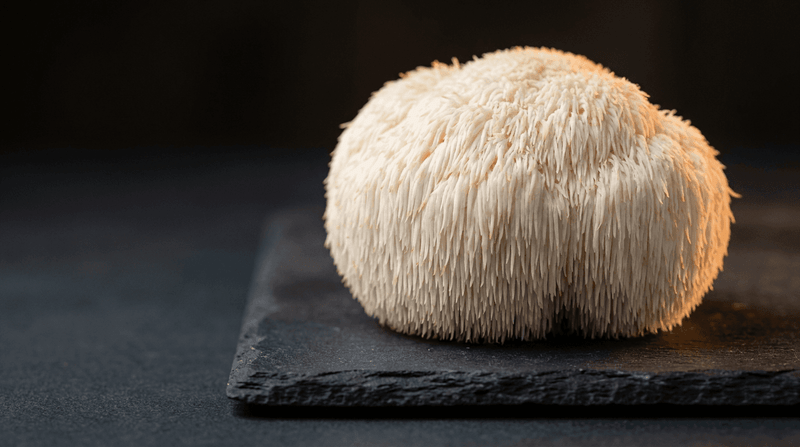
Lion's mane — the only real focus candidate. This is the mushroom with actual cognitive research, and it deserves credit. Small human trials have associated lion's mane with cognitive support — but note the fine print every time: doses of 1,000-3,000 mg per day, taken for weeks, with modest effects on the measures used. It is a slow, gradual support compound, not an on-demand focus switch. Our lion's mane deep dive walks through the studies.
Cordyceps — strong research, wrong target. The best human cordyceps trial (Hirsch et al., 2017) is real and well-run — but it measured endurance, not focus: time to exhaustion and VO2 max at 4,000 mg a day for three weeks. Borrowing that to sell "focus" is borrowing credibility the study never offered. (Cordyceps, examined.)
Reishi, chaga, turkey tail — not focus mushrooms at all. Their research, where it exists, is about fatigue, antioxidants, and immune-adjacent endpoints. None is a cognition story. Treating "functional mushroom" as one undifferentiated focus blob is the category's first sleight of hand.
So the honest version of "functional mushroom pouches for focus" is really "lion's mane, at gram doses, over weeks, for a modest lift." Now hold that against the pouch.
Where the Pouch Breaks the Research
The studies and the product disagree on two axes at once — dose and time:
Dose. Lion's mane research minimum: 1,000 mg/day. A typical focus-marketed mushroom pouch: about 30 mg of blended mushrooms, so roughly 10 mg of lion's mane. 1,000 ÷ 10 = 100 pouches a day to reach the bottom of the studied range. We show every step of this arithmetic in Do Mushroom Pouches Actually Work?
Time. The studies dosed daily for weeks before measuring a modest change. The pouch is sold for the meeting starting in ten minutes. Even at a research-level dose, lion's mane is not an acute focus tool — and a pouch is bought precisely for acute focus. The format and the evidence want opposite things.
This is not a knock on the mushroom. It is a knock on the claim printed over too little of it, aimed at a timeline it was never studied on.
There is also a quieter problem: even the lion's mane research is a small, early body of work. A handful of modest human trials is a reason for cautious interest, not a finished case — and it is a long way from the confident "boosts focus" language the pouches borrow from it. Honesty about the mushroom cuts both ways: the dose in a pouch is too low, and the underlying evidence is thinner than the marketing pretends even at full dose.
What Actually Supports Focus at a Pouch Dose
If you want focus from something held under your lip, you need an ingredient that is both active in milligrams and useful acutely. That points to true nootropics, not mushrooms:
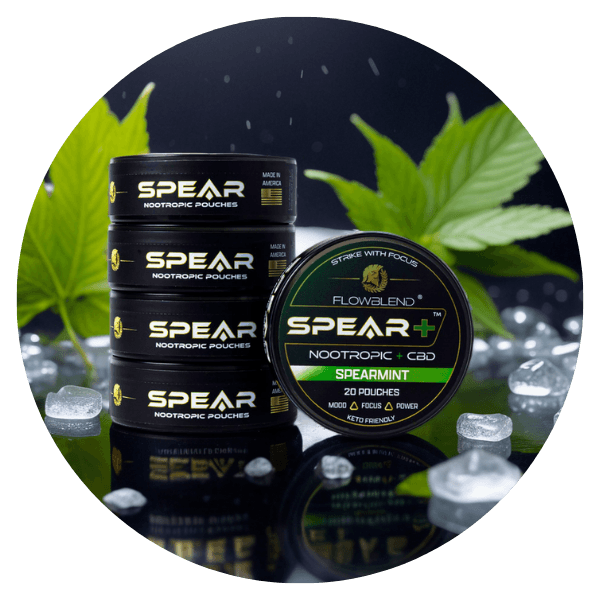
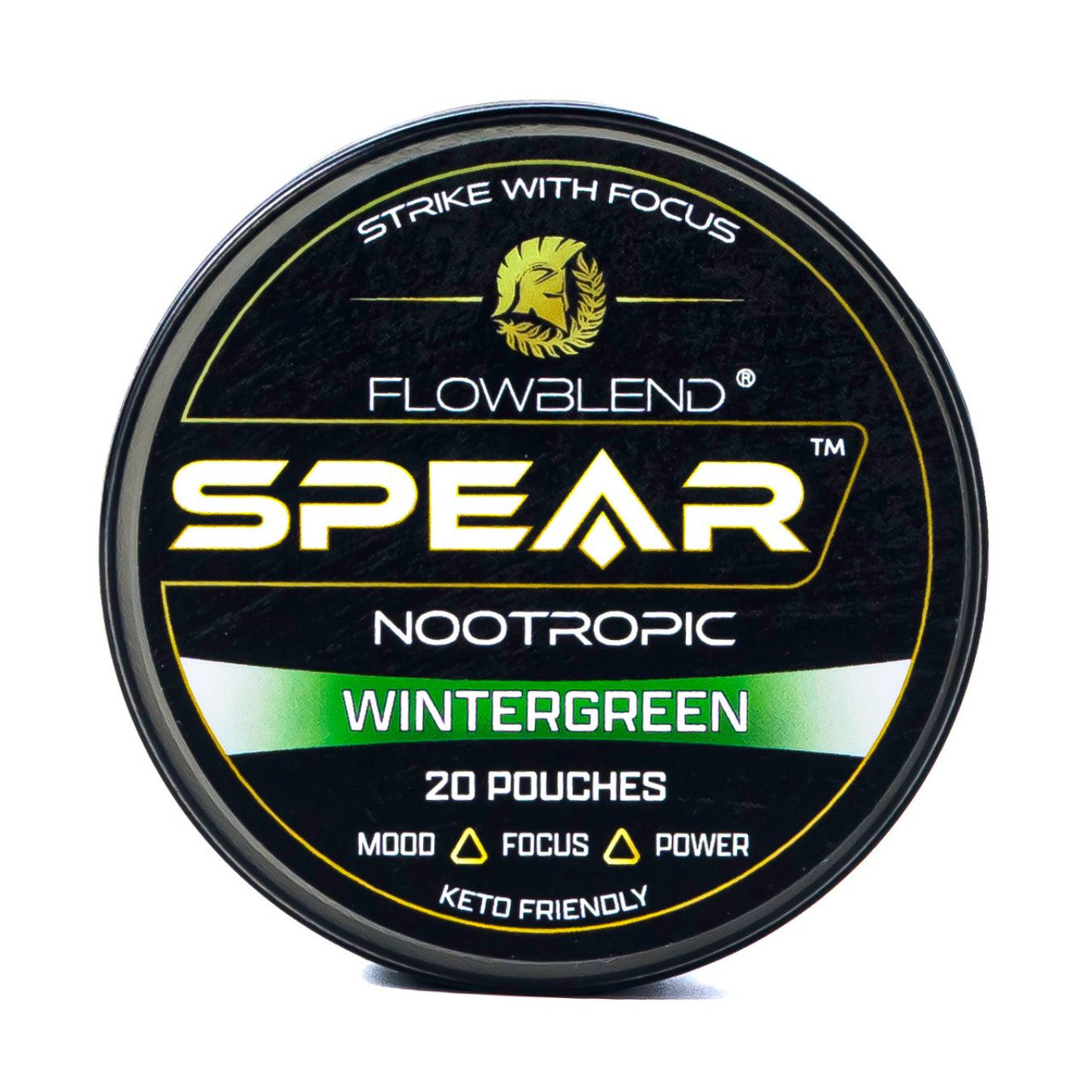
Alpha-GPC. A choline compound active at 150+ mg — a dose that fits in a pouch — feeding the acetylcholine system attention runs on. This is the core of SPEAR: 150 mg per pouch, printed, since 2021.
L-Theanine. The steadying counterweight to stimulation — smooths focus into something sustained rather than jangly. In the SPEAR formula for that job.
Rhodiola. One of the better-studied adaptogens for mental stamina under pressure — the long-day support, not a stimulant.
Uridine Monophosphate. Rounds out the choline pathway Alpha-GPC feeds.
That stack is built on the principle this whole cluster keeps returning to: ingredients that work at the dose a pouch can carry, every milligram on the label. Customers describe it as effect, not buzz:
"When I need to focus on a task, one lil pouch and I'm good for a couple hours of pure work and focus. It gives me the energy, strength and focus to power through the toughest days." — Suzi Mendoza, verified review
"I feel like my brain can make decisions better. Like I have more conscious control and I can get in the zone more casually." — Dillon Lehman, verified review
Can Mushrooms and Nootropics Work Together?
Reasonable question, honest answer: at pouch doses, the mushroom is not contributing enough to combine with anything. A blend of 10 mg lion's mane and a real Alpha-GPC dose is, functionally, an Alpha-GPC pouch with a mushroom on the label for marketing.
If you genuinely want lion's mane at its studied dose, the honest route is a separate gram-level supplement — capsules or powder, taken daily for weeks, as a slow background support — while a dosed nootropic pouch handles the acute focus a pouch is actually good at. Two tools, two jobs, no pretending one tin does both. The field guide lays out how the families divide the work.
The Honest Bottom Line
Functional mushrooms are not a scam, and lion's mane is not nothing — it is a legitimate slow-support compound at gram doses over time. But "functional mushroom pouches for focus" asks one mushroom to do a job at a tenth of its dose on a timeline it was never tested for, while quietly drafting three mushrooms that have no focus research at all.
If focus is the actual goal, buy the dose-fit tool and let the label prove itself: SPEAR, 150 mg of Alpha-GPC you can read on the can. The whole lineup — and the standard behind it — is at flowblend.com/shop.
The first nootropic pouch in America.
FAQ
Do functional mushroom pouches actually help focus?
The only mushroom with real focus research is lion's mane, at 1,000-3,000 mg daily over weeks for a modest effect. A pouch carries about 10 mg of it and is used acutely. Neither the dose nor the timeline matches the research, so the focus benefit a label implies is not supported.
What's the best functional mushroom for focus?
Lion's mane — it is the only one with human cognitive research. Cordyceps research is about endurance; reishi, chaga, and turkey tail are not focus mushrooms at all. But even lion's mane needs gram-level daily doses a pouch cannot deliver.
How much lion's mane do I need for focus?
Human studies used 1,000-3,000 mg per day, taken consistently for weeks. A typical mushroom pouch provides roughly 10 mg of lion's mane — about 1% of the lower research dose per pouch.
What works better than mushroom pouches for focus?
For acute focus in a pouch, Alpha-GPC is the dose-fit choice — active at 150 mg, which fits the format. SPEAR pairs it with L-Theanine, Rhodiola, and Uridine Monophosphate, every milligram printed.
Should I take lion's mane and a nootropic pouch together?
If you want lion's mane at its studied dose, take it as a separate gram-level daily supplement for slow background support, and use a dosed nootropic pouch for acute focus. A pouch cannot deliver both jobs at once.
Related Reading
- Mushroom Pouches: The Complete 2026 Guide — the pillar guide to the whole category
- Lion's Mane Pouches: Do They Actually Work? — the full deep dive on the focus mushroom
- Nootropic Pouches: Mushrooms vs. Alpha-GPC vs. CBD — A Field Guide
Nate is the founder of FlowBlend.