
Mushroom Pouches
Best Mushroom Pouches of 2026: Honest Rankings, Real Dosing
By Nate, founder of FlowBlend
The Short Version
We ranked the real mushroom pouch brands of 2026 by the three things that actually matter: dose transparency, third-party testing, and sourcing. Fully Loaded's ALPHA Mushrooms takes the top spot for printing per-ingredient milligrams. Flow Pouches leads on sourcing claims but discloses only a blend total. Every brand on this list — including the winner — delivers a fraction of the doses used in mushroom research. FlowBlend does not sell mushroom pouches, which is exactly why we can rank these straight.
First, Our Bias — Stated Up Front
FlowBlend makes nootropic, energy, and CBD pouches. We do not make a mushroom pouch, and nothing in our lineup competes head-to-head with the products below. We will tell you at the end what we build instead and why — but the rankings themselves have no horse in the race. Nobody on this list paid to be here, and nobody could pay to move up.
One more disclosure: every fact below comes from each brand's own published labels and pages as of this writing. Labels change, formulas get reformulated, and a brand that hides its dose today might disclose it next year (we hope they do). Check the can in front of you before you buy, and treat this list as a snapshot of mid-2026, not a permanent verdict. The criteria, though, are permanent — and they are where we start.
How We Ranked Them
Three criteria, weighted in this order:
- Dose transparency. Does the label state milligrams per pouch, per ingredient? A "blend" total is partial credit. No numbers is no credit. This is the whole game — you cannot evaluate what you cannot read.
- Third-party testing. Does the brand publish independent lab results, or at least name an accredited lab? Mushroom products have real quality variance; testing is how you know what is in the can.
- Sourcing and form. Fruiting body extract beats mycelium grown on grain. A named species beats "mushroom blend." We covered why in our turkey tail and reishi breakdowns.
What we did not rank on: price. Dose math and testing tell you what a product is. Price tells you what it costs. You can do that comparison yourself once you know the first part.
What we also did not rank on: whether the doses match the research — because if we had, this would be a blank page. No mushroom pouch on the market reaches the gram-level daily doses used in human studies. We run that math after the rankings, on the winners, so you can see exactly what you are buying.
The Rankings
1. Fully Loaded — ALPHA Mushrooms
The case for it: Fully Loaded prints what almost nobody else in this category will: per-ingredient milligrams per pouch. As of this writing, the ALPHA Mushrooms label lists 100 mg lion's mane, 100 mg cordyceps, and 33 mg chaga per pouch — 233 mg of named mushrooms, caffeine-free, 15 pouches per can. That is the most honest label in the mushroom pouch lane, full stop.
The honest limits: 233 mg is still a long way from research territory (math below). Fully Loaded is primarily a tobacco-alternative company, and the mushroom line is one product among many — sourcing detail (fruiting body vs. mycelium, extract ratios) is thinner on the page than the dose numbers are.
Bottom line: if you want a mushroom pouch and you want to know what is in it, this is the one to beat.
2. Flow Pouches
The case for it: Flow is the brand that built this category's search demand, and it gets real credit on sourcing: organic lion's mane, cordyceps, and reishi, with a 100% fruiting-body extract claim and GMP-certified, FDA-registered manufacturing language on the page. Zero caffeine, zero sugar. As a polished product with a clear identity, it is the category's front-runner for a reason.
The honest limits: transparency stops at the blend level. The label discloses 600 mg of total mushroom blend per 20-pouch can — which works out to 600 ÷ 20 = 30 mg of combined mushroom extract per pouch, roughly 10 mg per mushroom. Flow does not publish per-ingredient, per-pouch numbers. The brand's own usage guidance of 4–6 pouches a day puts a ceiling of 6 × 30 = 180 mg of blend per day — and we would rather they printed that math than leave it to us.
Bottom line: best-in-category sourcing story, weakest-in-category dose disclosure among the ranked brands.
3. Cyclone Pods — Focus Pouches
The case for it: Cyclone publishes full ingredient breakdowns and states its products are tested by an ISO 17025-accredited lab — strong marks on criteria one and two. The formula is honest about being a hybrid: lion's mane alongside nootropics like Alpha-GPC and ashwagandha rather than mushrooms alone.
The honest limits: that hybrid design means it is only partly a "mushroom pouch" — and when a hybrid pouch works, the nootropic ingredients are usually what you are feeling. Worth knowing what you are actually buying.
Bottom line: a transparent hybrid. Rank it here if your search for "mushroom pouches" was really a search for "something that works in a pouch."
Everyone else
Beyond these three, the category gets murky fast: white-label products with stock photography, "proprietary mushroom blends" with no weights, and listings that will not commit to a species. We are not naming and shaming — but if a label will not give you a single milligram number, it has answered your question already.
Built For Pressure
Red Flags That Kept Brands Off This List
For every brand above, a dozen got cut. Here is what dropped them — useful as a filter when you are standing in front of a can this article did not cover:
- "Proprietary blend" with no per-ingredient weights. The single most common dodge. It is legal, and it exists for exactly one reason: so you cannot run the math. A blend total is the bare minimum; a true proprietary blend with no total at all is a hard pass.
- Doses listed per can, never per pouch. A 600 mg can sounds substantial until you divide by 20. Brands that quote the can are hoping you will not.
- Mushroom names with no form stated. "Lion's mane" could be fruiting-body extract or mycelium grown on rice. The difference is enormous, and the silence is deliberate. (We unpack this in the turkey tail breakdown.)
- Research citations with no doses attached. A footnote to a real lion's mane study, next to a pouch holding 2% of that study's dose, is borrowed credibility. The citation is true; its relevance to the product is not.
- Transformation language over a token dose. "Unlock your potential" printed over 10 mg of anything tells you the marketing budget exceeded the formulation budget.
- No lab results, or a badge instead of a report. A "lab tested" graphic is not a certificate of analysis. If you cannot open the actual document, assume it does not exist.
None of these make a product unsafe. They make it unevaluable — and an unevaluable product cannot earn a ranking, however good the story on the front is.
The Dose Reality Check, Applied to the Winners
Now the part the category hopes you skip. Human mushroom research uses gram-level daily doses — we have walked through the studies mushroom by mushroom in this cluster (lion's mane: 1,000–3,000 mg daily; cordyceps: 4,000 mg daily; reishi: 5,400 mg daily). Hold the two best-ranked products against those numbers, step by step.
Fully Loaded ALPHA Mushrooms — the transparency winner:
- Lion's mane: 100 mg per pouch. Research minimum: 1,000 mg per day. 1,000 ÷ 100 = 10 pouches a day to reach the bottom of the research range.
- Cordyceps: 100 mg per pouch. The strongest human trial used 4,000 mg per day. 4,000 ÷ 100 = 40 pouches a day.
- A full 15-pouch can holds 15 × 100 = 1,500 mg of lion's mane — one and a half days of the research minimum, if you used the entire can daily.
Flow Pouches — the category leader:
- Roughly 10 mg of lion's mane per pouch (a third of the 30 mg combined blend). 1,000 ÷ 10 = 100 pouches a day to hit the research minimum.
- At Flow's own recommended maximum of 6 pouches a day: 6 × 10 = 60 mg of lion's mane — 6% of the minimum studied dose (60 ÷ 1,000 = 0.06).
This is why our rankings measure honesty, not efficacy. The most transparent label in the category still delivers a tenth of the research dose, and the category leader delivers a hundredth. Ranking mushroom pouches by which one "works best" would be ranking rain dances by cloud cover.
If you want the full picture of what the research actually says — and what "working" would even mean at these doses — that is its own article: Do Mushroom Pouches Actually Work? And the complete category breakdown lives in our 2026 mushroom pouch guide.
What Would Earn a Higher Ranking
We would genuinely like this category to get better. Any brand that wants the top of next year's list needs four things on the page:
- Per-ingredient milligrams per pouch. Not per can, not per "serving," not a blend total.
- Published third-party lab results — an actual certificate of analysis a customer can open, not a badge graphic.
- Form and extraction stated plainly. Fruiting body or mycelium. Extract ratio. Beta-glucan percentage if you want to show off.
- Usage guidance that matches the label. If the honest math says your product is a ritual, say ritual things. Selling 10 mg of lion's mane with "unlock your cognitive potential" copy is how the whole category loses trust.
None of this is exotic. It is the labeling standard serious supplement brands already meet. The first mushroom pouch brand to do all four will deserve the spot.
If You Want a Tool Instead of a Ritual
Here is what we build, held to the same standard we just applied to everyone else.
We looked at the mushroom math years ago and made a different call: build pouches around ingredients that are effective at the doses a pouch can actually hold, and print every milligram. That decision became three product lines:
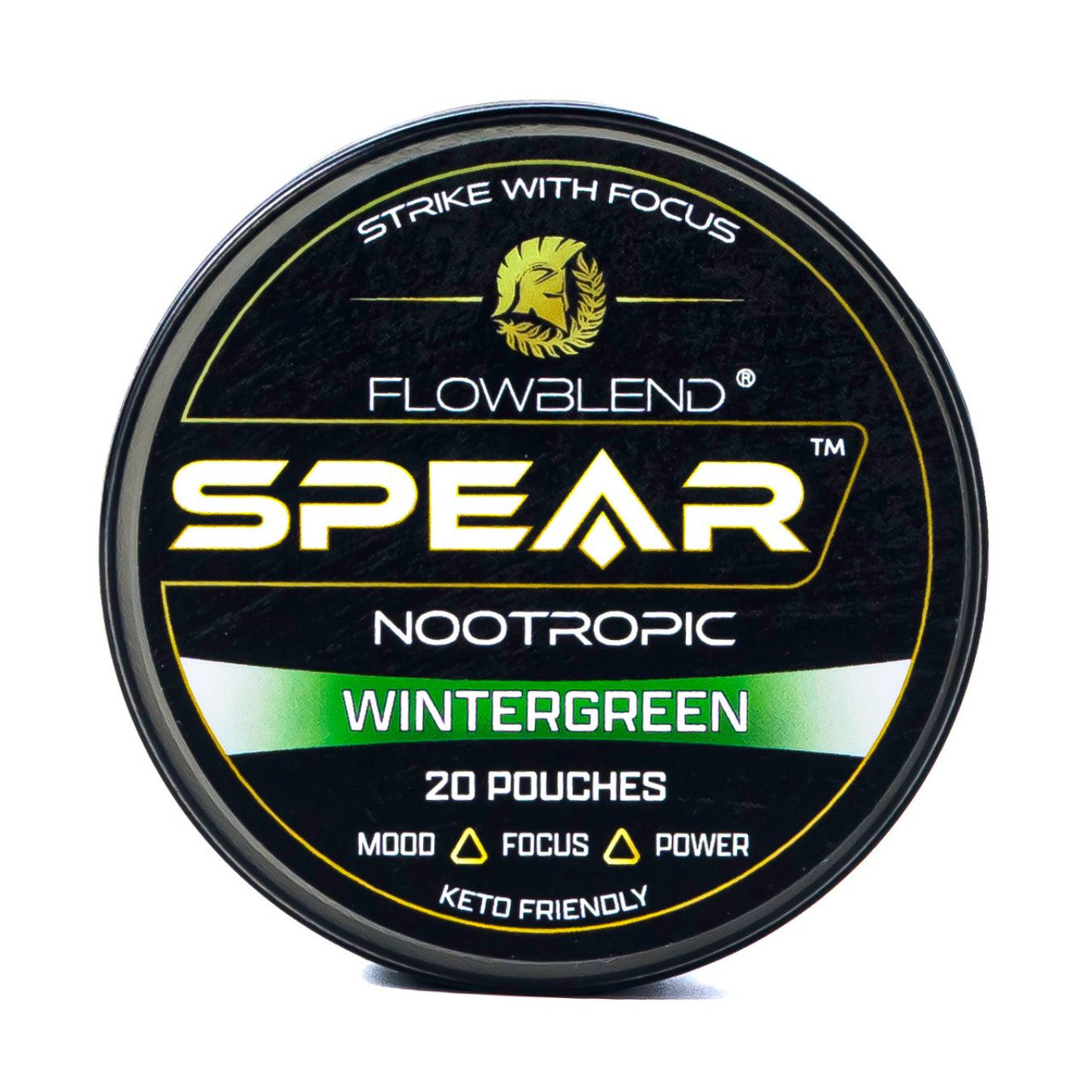
- Focus: SPEAR nootropic pouches — 150 mg Alpha-GPC plus Rhodiola, L-Theanine, and Uridine Monophosphate. The first nootropic pouch in America, on the market since 2021.
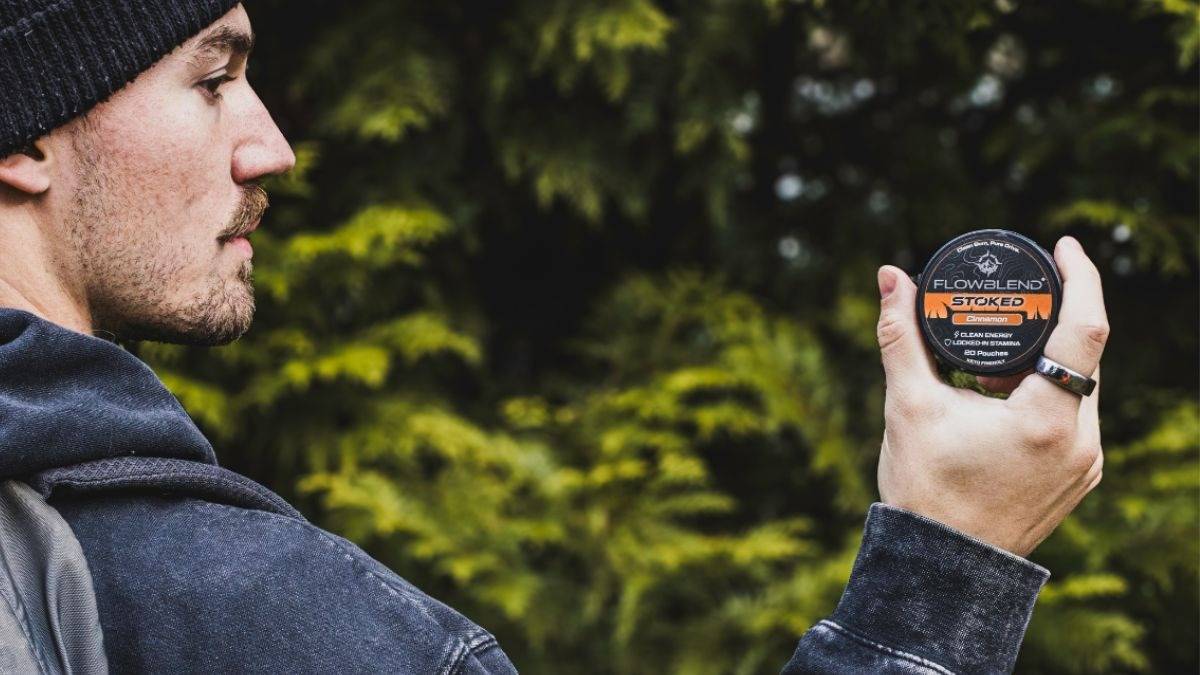
- Energy: STOKED — PurCaf organic caffeine with CoQ10, B12, and methylfolate. Caffeine is the most-studied performance compound on earth, and it works in pouch-sized milligrams.
- Calm: CLUTCH — 10 mg CBD per pouch, third-party tested, 20 per can — with CLUTCH 75 as the high-dose evening tier.
Every can passes the four-point checklist above: per-pouch milligrams, third-party testing, named ingredients, and copy that matches the label. The full lineup is at flowblend.com/shop.
Mushrooms are a ritual. Tools are tools. Now you have the numbers to tell which one any given can is selling.
FAQ
What is the best mushroom pouch in 2026?
By dose transparency, Fully Loaded's ALPHA Mushrooms — it prints per-ingredient milligrams (100 mg lion's mane, 100 mg cordyceps, 33 mg chaga per pouch as of this writing). Flow Pouches leads on sourcing claims but only discloses a 600 mg blend total per 20-pouch can.
Do any mushroom pouches contain a research-level dose?
No. Human mushroom studies use 1,000–5,400 mg of extract daily depending on the mushroom. The best-disclosed pouch on the market holds 233 mg of combined mushrooms; the category leader holds about 30 mg. The gap is 10x to 100x depending on the brand.
Are mushroom pouches better than nicotine pouches?
They are different products — mushroom pouches contain no nicotine and no stimulants in most cases. As a nicotine-free way to keep the pouch ritual, they work fine. We compare the two directly in our mushroom vs. nicotine pouches breakdown.
What should I look for on a mushroom pouch label?
Four things: per-ingredient milligrams per pouch, published third-party lab results, fruiting body vs. mycelium stated plainly, and marketing claims that match the dose. Most brands fail at least three.
Why doesn't FlowBlend make a mushroom pouch?
Because the doses that show results in human research do not fit in a pouch, and we will not sell a label that needs a disclaimer to survive arithmetic. We build pouches around ingredients that work at pouch scale: Alpha-GPC, caffeine, and cannabinoids — every milligram printed.
Related Reading
- Mushroom Pouches: The Complete 2026 Guide — the pillar guide to the whole category
- Lion's Mane Pouches: Do They Actually Work? — the dose math on the focus mushroom
- Do Mushroom Pouches Actually Work? A Dosing Reality Check — the full dosing reality check
Nate is the founder of FlowBlend.